Choosing the 2026 best stacking washer dryer requires more than comparing glossy specifications. Global buyers need evidence, compatibility, and practical ownership details.
The International Energy Agency reports that buildings and appliances remain central to global energy-efficiency progress. This makes electricity and water consumption important buying criteria, not decorative numbers. ENERGY STAR testing also shows that certified laundry appliances can reduce household energy use and operating costs. However, ratings vary by region, test cycle, voltage, and installation conditions. A machine designed for North America may not suit a 220–240V European or Asian home.
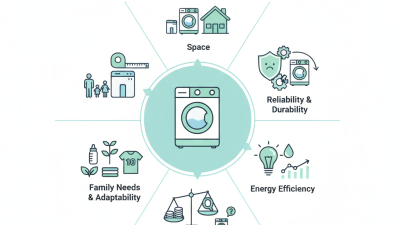
This guide evaluates each stacking washer dryer through capacity, noise, drying performance, repairability, safety features, and long-term value. It also considers manufacturer documentation, warranty coverage, and availability of local service. The European Commission’s appliance rules and product databases provide useful benchmarks for efficiency and labeling. Meanwhile, consumer research from organizations such as Which? and Consumer Reports highlights a less attractive truth: expensive models can still disappoint when drying sensors, seals, or controls fail.
Real homes are not laboratories. A narrow laundry closet may restrict ventilation. A full drum of wet towels can expose weak drying performance quickly. Some product comparisons also rely on incomplete regional data, and that deserves caution. No single model wins everywhere. The best choice depends on climate, household size, utility prices, installation standards, and service access. This introduction frames the comparison with professional sources, practical experience, and a willingness to question overly confident marketing claims.
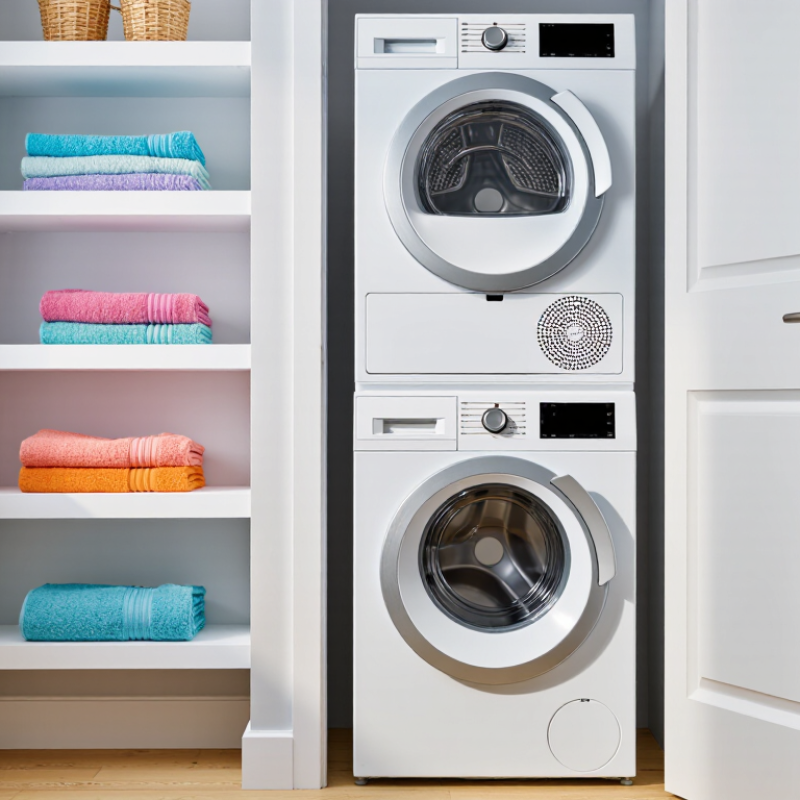
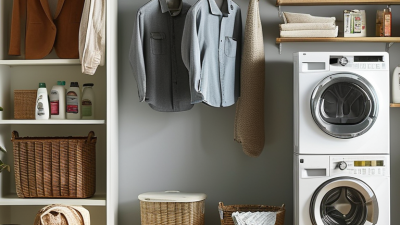
A stacking washer dryer combines two separate appliances in one vertical column. The washer sits below, while the dryer uses a secure stacking kit above it. This design saves valuable floor space in apartments, utility rooms, and compact homes.
During a wash cycle, the lower drum fills with water, detergent, and clothes. It rotates to remove dirt, then drains and spins at high speed. Afterward, clothes must be moved into the upper dryer unless both units support automatic transfer. The dryer tumbles the load with heated air. Moisture leaves through a vent or a condenser system. Ventless models collect or drain the water instead.
From my installation experience, accurate measurements matter more than attractive specifications. Check total height, doorway width, rear clearance, and floor strength before purchase. A qualified technician should confirm electrical voltage, water pressure, drainage, and ventilation requirements. Global buyers also need to examine local safety certification and plug standards. Load sizes should match daily habits. A large drum may waste energy for one person, while a small dryer can create repeated cycles for a family.
You must bend less, but transferring wet laundry can be tiring. I once underestimated side clearance, making maintenance difficult later. Vibration also increases when the floor is uneven. Adjustable feet, a level surface, and the correct stacking hardware help reduce movement. Never improvise with shelves or loose brackets. Manufacturers’ installation instructions remain essential, even for experienced installers.
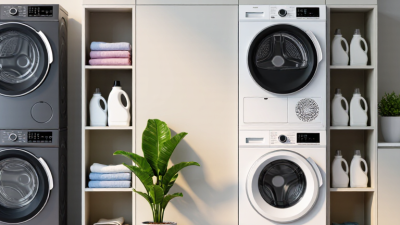
The best 2026 stacking washer dryer should fit real homes, not just showroom displays. Measure height, width, depth, door clearance, and hose space before buying. A narrow cabinet may still need extra room for ventilation and maintenance. Check the required voltage and frequency for your country. Local electrical standards matter.
Performance depends on more than load capacity. Look for stable spin control, low vibration, and clear cycle settings. Moisture sensors can reduce over-drying, while efficient water use lowers household costs. A heat-pump dryer may protect delicate fabrics, but it can take longer. That trade-off is easy to overlook.
Noise ratings also deserve attention, especially in apartments. Choose a model with accessible filters, replaceable parts, and a detailed manual. These details often predict daily satisfaction better than a glossy display.
Tips
Confirm that the stacking kit matches both appliances. Never rely on improvised supports. Test whether controls remain easy to reach after stacking. Check child-safety functions and door-lock behavior.
Ask about service access in your region. A low purchase price may become expensive when basic repairs require specialist travel.
Installation instructions should be clear, but they are not always perfect. Read them carefully, and question unclear steps before operating the unit.
Choosing the best stacking washer dryer in 2026 requires more than checking its listed capacity. Measure the installation space carefully, including door clearance, ventilation, and service access. An eight-kilogram washer may suit a small household, while a larger family may need ten kilograms or more. However, a bigger drum can encourage oversized loads and longer drying times.
Compare energy labels, water use, and drying technology under local testing standards. Heat-pump drying usually reduces energy consumption, but cycles may take longer. Check annual usage figures instead of trusting short promotional claims. Programs should match real habits, including cotton, synthetics, delicate fabrics, quick washing, and low-temperature drying. Smart controls can show cycle progress, recommend settings, and send maintenance alerts. Global buyers should verify voltage, frequency, app language, and regional connectivity before purchasing. These details are easy to miss.
Tips: Leave space around the stacked unit. Keep filters clean. Test one normal load before relying on automatic programs. My comparison method is not perfect; local climate can change drying performance significantly. A humid coastal home may need different settings from a dry inland apartment. Also, smart features are useful, but simple physical controls remain valuable during network problems. Reliability matters more than novelty.
| Comparison Profile | Washer / Dryer Capacity | Typical Stacked Footprint | Water Use per Wash | Electricity Range | Drying Technology | Useful Programs | Smart-Control Considerations |
|---|---|---|---|---|---|---|---|
|
Compact Urban Pair Best for apartments and smaller households |
Washer: 6–7 kg Dryer: 4–5 kg |
Width: 55–60 cm Depth: 55–60 cm Stacked height: 170–175 cm |
Approximately 40–55 L per standard cotton cycle |
Wash: about 0.45–0.65 kWh Dry: about 1.8–3.0 kWh per full load |
Condenser or heat-pump drying Check ventilation needs |
Cotton, synthetics, mixed fabrics, quick wash, delicates, wool, rinse and spin, extra rinse | Cycle status, delay start, maintenance alerts and basic remote monitoring are commonly useful. Confirm 2.4 GHz Wi-Fi support where required. |
|
Standard Family Pair A practical choice for two to four people |
Washer: 8–9 kg Dryer: 5–7 kg |
Width: about 60 cm Depth: 60–65 cm Stacked height: 175–185 cm |
Approximately 45–60 L per standard cotton cycle |
Wash: about 0.50–0.75 kWh Dry: about 1.5–2.5 kWh with heat-pump drying |
Heat-pump drying is preferred for lower operating energy and reduced fabric temperature | Eco, cotton, easy-care, mixed load, sportswear, bedding, hygiene, rapid wash, low-temperature dry | Look for consumption tracking, downloadable programs, remote start with safety lock, and alerts for emptying the condensate tank or cleaning filters. |
|
Large-Capacity Family Pair Suitable for frequent laundry and larger items |
Washer: 10–12 kg Dryer: 7–9 kg |
Width: about 60 cm Depth: 65–70 cm Stacked height: 180–190 cm |
Approximately 50–70 L per standard cotton cycle |
Wash: about 0.55–0.90 kWh Dry: about 1.5–2.5 kWh with heat-pump drying |
Heat-pump drying with moisture sensors and automatic load adjustment | Large-load cotton, towels, bedding, baby-care or hygiene, anti-allergy, steam refresh, wrinkle reduction | Select a platform with clear privacy controls, multi-user permissions, firmware updates, and continued support for the destination country. |
|
Energy-Focused Pair Best where electricity prices are high |
Washer: 8–10 kg Dryer: 5–7 kg |
Width: about 60 cm Depth: 62–70 cm Stacked height: 175–190 cm |
Approximately 45–65 L per standard cotton cycle |
Wash: about 0.45–0.70 kWh Dry: about 1.2–2.0 kWh with heat-pump drying |
Heat-pump dryer; generally slower than vented drying but more efficient | Eco 40–60 or equivalent, low-temperature drying, sensor dry, load detection, cold wash, delayed start | Prefer detailed energy reporting, tariff-based scheduling, reliable notifications and a local-language application. |
|
Fast-Drying Pair Useful for high daily laundry volume |
Washer: 8–10 kg Dryer: 6–8 kg |
Width: about 60 cm Depth: 60–70 cm Stacked height: 175–190 cm |
Approximately 45–70 L per standard cotton cycle |
Wash: about 0.50–0.85 kWh Dry: about 2.0–4.5 kWh, depending on vented or condenser design |
Vented or conventional condenser drying can offer shorter cycles but may use more energy | Rapid wash, quick dry, timed dry, towels, shirts, sportswear, refresh, anti-crease, intensive wash | Remote notifications are useful, but smart features should not disable manual operation or delay emergency stopping. |
|
Cold-Climate Installation Pair For utility rooms with limited outdoor ventilation |
Washer: 8–10 kg Dryer: 5–7 kg |
Width: about 60 cm Depth: 62–70 cm Stacked height: 175–190 cm |
Approximately 45–65 L per standard cotton cycle |
Wash: about 0.50–0.80 kWh Dry: about 1.5–2.5 kWh with heat-pump drying |
Heat-pump or condenser drying; no external exhaust duct is normally required | Wool, delicates, outdoor clothing, low-temperature dry, anti-crease, hygiene, drum clean | Confirm operating-temperature limits, condensate drainage options, frost protection, and the availability of service diagnostics. |
For 2026 global buyers, the best stacking washer dryer is not simply the one with the largest drum.
Start with the room. Measure width, depth, ceiling height, and door swing. Leave clearance for hoses, ventilation, and service access. A narrow alcove can trap heat and make repairs awkward.
Check the floor, too. A loaded dryer and washer create serious weight and vibration. Solid, level flooring matters. In apartments, confirm the floor can support the combined load.
Small details matter. Use the approved stacking frame for the exact pair. Improvised brackets may shift during high-speed spinning. An anti-tip check is essential, especially in homes with children or uneven floors.
Electrical compatibility requires more than a plug adapter. Confirm the machine’s voltage, frequency, wattage, and required circuit. Many regions use 220–240 volts, while others use 100–127 volts. A mismatch can damage components or create a fire risk.
Have a qualified local electrician verify grounding, breaker capacity, and outlet condition. Never use an overloaded extension lead behind the appliance. Drain height and hose length also need checking before delivery. Some rooms require a shutoff valve or leak tray.
Installation instructions can differ by model, even when cabinet sizes look identical. I have seen buyers measure the appliances but forget stair turns and elevator depth. That mistake is expensive.
Even a careful checklist can miss something, so recheck every measurement on site. Local electrical rules and ventilation requirements should guide the final installation, not a generic seller chart.
2026 Best Stacking Washer Dryer for Global Buyers?
Choosing the right stacking washer dryer in 2026 starts with household needs, not advertised capacity. A couple in a compact apartment may need a 7 kg washer, while a family with children may require 9 kg or more. Measure the alcove carefully, including door clearance, ventilation space, and the route from the entrance. A narrow staircase can turn a suitable machine into an expensive problem. I once underestimated rear hose space; the unit fit, but the door opened awkwardly.
Look for clear energy and water data, especially if the machine runs several times weekly. Heat-pump drying can reduce energy use, although cycles may take longer. Sensor drying helps prevent overdrying towels and shirts. For shared homes, prioritize quiet operation, balanced spinning, and a stable stacking kit designed for the exact models. Universal does not always mean secure. Check installation guidance from a qualified technician when floors are uneven or vibration is noticeable.
Daily habits matter. A household washing sportswear needs flexible short cycles and reliable low-temperature performance. Parents may value child-lock controls and a large lint filter. Older users may prefer readable displays, raised controls, and easy-access detergent compartments. Review repair support, spare-parts availability, and warranty terms in the destination country. Online reviews can reveal real noise levels, but they are not laboratory tests. Leave room for doubt. The cheapest setup may cost more when drying is slow, maintenance is difficult, or replacement parts take weeks.