A Powerline Transformer is more than a steel tank beside a road. Its design affects voltage quality, service continuity, losses, and maintenance work across an electrical network. This guide introduces China’s top 10 Powerline Transformer manufacturers and the practical factors that distinguish them. Readers will find a useful starting point, not a universal ranking: project requirements, testing evidence, and after-sales support can change which supplier is the better fit.
Thomas A. Short, author of the Electric Power Distribution Handbook, is a recognized authority on distribution systems. A fair paraphrase of the engineering principle reflected in his work is: “Choose equipment for the network conditions it must serve, not for its nameplate alone.” That principle matters when comparing manufacturers. A substation project may prioritize high-voltage performance and proven type tests. A utility replacing aging units may focus on delivery schedules, spare parts, and field service. Details matter. Ask how suppliers document efficiency, temperature rise, insulation performance, and routine testing. Check whether stated capabilities match the exact voltage, capacity, and operating environment you need.
The comparison also has limits. Public product pages rarely reveal the full story behind manufacturing consistency or long-term field performance. A polished catalogue is not a substitute for factory audits, technical clarification, and reference checks. Some buyers may weigh price too heavily; that is worth questioning. The sections ahead outline leading Chinese manufacturers, their product strengths, and the questions buyers should ask before shortlisting them. Use the list as a research map, then verify every claim against project specifications and current supplier documentation.
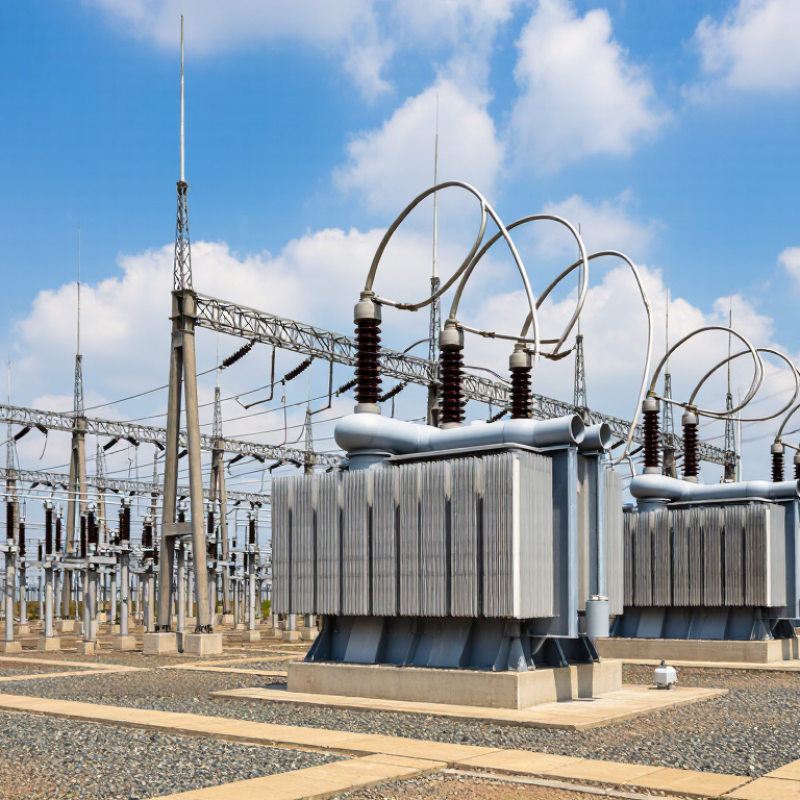
Powerline transformers transfer energy through magnetic coupling and adjust voltage between generation, transmission, and distribution. At 50 Hz, each alternating-current cycle lasts 20 milliseconds. The changing magnetic field repeatedly induces voltage in the windings. IEC 60076 covers key power-transformer requirements, including insulation, temperature rise, and testing. In a substation, cooling radiators and winding temperature indicators help operators monitor heat under load. Small details matter.
The main types serve different jobs. Step-up units raise generator voltage for transmission; step-down units reduce it near consumers. Distribution transformers supply local networks, while autotransformers connect voltage levels using shared windings. Units may also be single-phase or three-phase, and oil-immersed or dry-type. Each choice affects installation space, cooling, maintenance, and operating conditions. A rated voltage alone can mislead; actual performance depends on load and ambient temperature.
The IEA’s 2023 report, Electricity Grids and Secure Energy Transitions, says annual grid investment needs to exceed USD 600 billion by 2030, up from roughly USD 300 billion. That scale puts transformer capacity and aging equipment in sharper focus, though investment figures do not describe every local grid’s needs.

China’s transformer landscape spans local distribution networks and long-distance transmission corridors. Units rated around 10–35 kV commonly serve factories, commercial buildings, and neighborhood substations. Their work is practical and close to daily life: reducing voltage for equipment, managing changing loads, and operating through hot summers or cold mornings. Compact designs may fit into tight substations, but installation space is only one part of the decision.
At the transmission end, transformers support systems reaching 1,000 kV UHV AC. These installations move large amounts of electricity across long distances, so insulation coordination, cooling, transport, and site commissioning matter greatly. The voltage figure alone does not describe a transformer’s capability. Capacity, winding design, load profile, and operating conditions all shape performance. Very large units also require careful logistics; a transport route can become a project constraint. Small details count.
Manufacturers may specialize in different voltage classes, and not every producer serves the full range. Buyers should compare verified technical data, test documentation, service capability, and experience with similar installations. A nameplate never tells the whole story. Even a well-designed unit can face issues when grid conditions or maintenance practices differ from the original assumptions. That deserves a closer look.
This table describes ten representative AC voltage classes and their typical grid applications; it is not a ranking of manufacturers. Voltage classes refer to nominal system voltage. Transformer winding ratings, configurations, and capacities vary by project and network requirements.
| No. | Nominal Voltage Class | Typical Grid Role | Common Transformer Application | Key Engineering Considerations |
|---|---|---|---|---|
| 1 | 10 kV | Urban and rural medium-voltage distribution | Distribution transformers serving local networks, commonly stepping down to low-voltage service. | Load profile, short-circuit withstand, insulation coordination, and distribution-network losses. |
| 2 | 20 kV | Medium-voltage distribution where this class is adopted | Distribution and network transformers configured for the local 20 kV system. | Compatibility with the regional network standard, insulation level, and available switching equipment. |
| 3 | 35 kV | Distribution and subtransmission | Substation transformers supplying lower-voltage distribution networks or industrial loads. | Voltage regulation, tap-changing requirements, cooling, and protection coordination. |
| 4 | 66 kV | Regional subtransmission in networks using this class | Substation transformers linking 66 kV lines with medium-voltage networks. | Regional network conventions, insulation coordination, and site-specific transport limits. |
| 5 | 110 kV | Regional transmission and major substations | Power transformers connecting transmission networks to 35 kV or lower-voltage systems. | On-load tap changing, system fault levels, cooling capacity, and monitoring provisions. |
| 6 | 220 kV | High-voltage transmission and interconnection | Large substation transformers, including autotransformers where network design calls for them. | Insulation coordination, winding temperature limits, transport planning, and system stability. |
| 7 | 330 kV | High-voltage transmission in regions operating at this level | Grid transformers used at major transmission substations and network interfaces. | Terminal and bushing clearances, lightning-impulse withstand, cooling, and field maintenance access. |
| 8 | 500 kV | Extra-high-voltage bulk power transmission | Large power transformers or autotransformers at 500 kV substations. | High-voltage insulation design, short-circuit strength, transportation constraints, and condition monitoring. |
| 9 | 750 kV | Extra-high-voltage transmission used in parts of China | Substation transformers and autotransformers supporting 750 kV transmission corridors. | High-field insulation coordination, substation layout, transport logistics, and specialized testing. |
| 10 | 1,000 kV AC | Ultra-high-voltage AC bulk transmission | UHV AC substation transformation, typically using large transformer units or bank arrangements selected for the project. | UHV insulation coordination, electric-field control, transport and installation planning, and comprehensive testing. |
A fair comparison of China’s top ten powerline transformer manufacturers starts with the nameplate, not the headline MVA. Record rated power at each cooling stage, voltage ratio, impedance, and temperature-rise limits. A 100 MVA unit may deliver that rating only under specified cooling and ambient conditions. IEC 60076-1 provides the general rating framework; IEC 60076-2 covers temperature rise for liquid-immersed transformers. Ask for the complete test schedule, not just a catalogue figure. Small detail, big consequence.
Efficiency deserves equal scrutiny. Compare guaranteed no-load and load losses at the same rating, voltage, and test temperature. Then estimate annual energy losses using the expected load profile; a lightly loaded unit may be more affected by no-load losses. The U.S. Department of Energy’s 2016 distribution-transformer standards analysis estimated about 3.4 quadrillion Btu in energy savings over 30 years, underscoring why loss figures matter beyond purchase price. IEC 60076-5 also sets out short-circuit withstand requirements, useful when checking whether a design fits the network’s fault levels. Still, polished test sheets do not prove consistent factory quality. Review accredited test reports, traceability, and routine-test records, and verify that the offered configuration matches the tested one. The IEA’s 2023 grids report says annual grid investment needs to exceed $600 billion by 2030, making dependable capacity and documented performance practical procurement concerns.
Comparing China’s leading powerline transformer manufacturers means looking beyond factory size. Product range matters because grid projects vary widely. A utility may need compact distribution units for village feeders, while a transmission substation requires high-capacity transformers built for demanding voltage levels. Some manufacturers also offer autotransformers, dry-type units, and equipment for renewable-energy connections. More options can simplify sourcing, but they do not automatically mean a better fit.
Grid application should guide the technical review. Check rated voltage and capacity, cooling method, insulation design, impedance, and short-circuit withstand capability. Ask how routine and type tests are documented, and whether the supplier can provide installation guidance and dependable spare-parts support. For a wind or solar project, fluctuating output can affect equipment selection. For an urban substation, footprint, noise, and maintenance access may matter more. Small details count.
A comparison of ten manufacturers should therefore weigh application experience alongside product breadth. Request drawings, test records, and references for projects with similar operating conditions. Then check whether the proposed unit matches the grid’s actual load profile, not just its peak rating. That distinction is easy to miss. Supplier claims also deserve careful checking; specifications can look impressive on paper, yet service conditions are rarely so tidy.
China Top 10 Powerline Transformer Manufacturers
For procurement, compare transformer losses on identical ratings, voltage ratios, tap positions, cooling methods, and test conditions. Request guaranteed no-load and load-loss values, not a single combined figure. No-load loss continues whenever the unit is energized; load loss rises with current. Numbers need context. Confirm the stated reference temperature and rated frequency, then review routine test reports against the purchase specification. A small loss difference can matter over years, but the lowest figure is not automatically the best choice.
Check impedance against the required system fault level and parallel-operation needs. A mismatch can affect load sharing, while an unsuitable value may increase fault stress. Insulation review should cover the specified power-frequency withstand and lightning-impulse levels, plus operating altitude where relevant. Ask for test evidence tied to the exact design and rating. Paper is not performance. Confirm whether compliance is claimed to the applicable GB requirements, IEC requirements, or both; editions and test scopes may differ. Factory acceptance testing should identify measured losses, impedance, winding resistance, and dielectric results. One detail is easy to miss: verify that the test configuration matches the ordered unit, including taps and accessories. Procurement teams should record exceptions rather than treating every deviation as harmless.
Representative IEC insulation withstand levels by highest voltage for equipment (Um). Values are in kV; verify the applicable standard edition and project specification before procurement.
Procurement note: The chart shows representative insulation levels in IEC 60076-3, not manufacturer test results. Losses and impedance depend on transformer rating and design, so compare guaranteed values for the same rating, voltage, tap, cooling method, and test conditions. Check the contract’s applicable GB/T 1094 and IEC requirements and request routine and type-test documentation.