Choosing a Lightning Alert Device in 2026 requires more than comparing prices, range, or app features. It requires understanding how warnings behave in real conditions. A device may flash beside a pool, vibrate on a construction site, or sound weakly through a closed warehouse door. Small details matter.
The National Weather Service reports that lightning remains one of the leading weather-related causes of death in the United States. NOAA also explains that a single lightning channel can reach temperatures near 50,000°F. These figures make response time important, but they do not make every alert system equally reliable. Vaisala’s Annual Lightning Report shows continued global lightning activity across land and ocean, reinforcing the need for localized monitoring rather than general weather awareness. The World Meteorological Organization also emphasizes that effective early-warning systems need accurate detection, clear communication, and user action.
Ronald L. Holle, a widely cited lightning-safety researcher, has described lightning as “one of the most underrated weather hazards.” That warning still feels practical in 2026. A dependable Lightning Alert Device should combine detection accuracy, audible and visual alerts, backup power, weather resistance, and simple installation. It should also explain its alert radius and delay.
There is no perfect device.
Buyers often overlook maintenance. Batteries expire. Sensors lose visibility. Internet connections fail. A thoughtful comparison must examine those weaknesses, not hide them. This guide evaluates available technologies through documented performance, field experience, manufacturer transparency, and safety guidance from NOAA, the National Weather Service, Vaisala, and the WMO. The goal is not fear. It is better judgment before the first distant rumble becomes dangerously close.
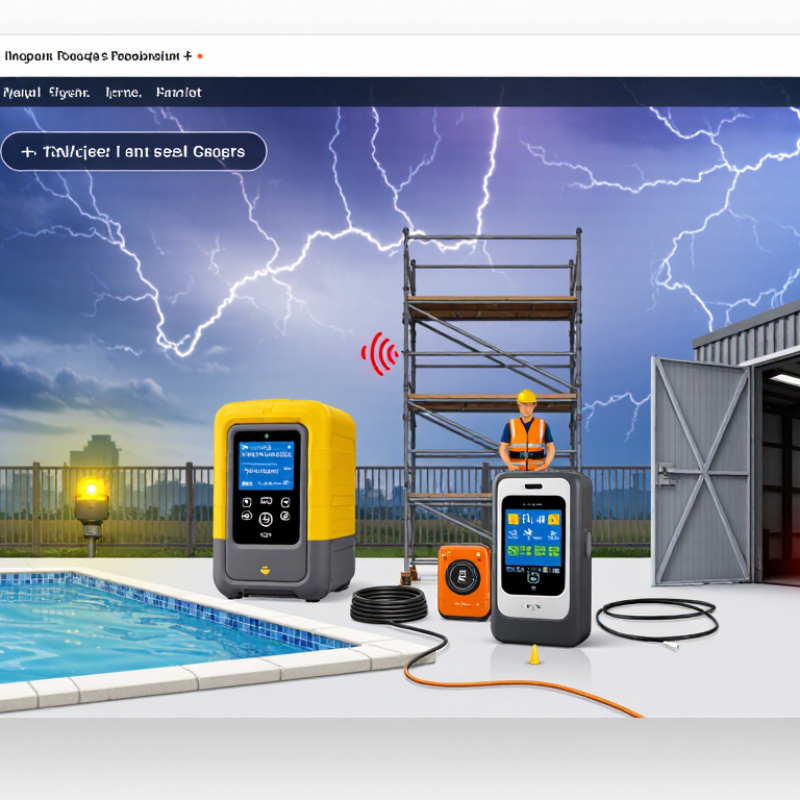
How to Choose a Lightning Alert Device in 2026?
Understanding Lightning Alert Devices and Their Purpose
A lightning alert device detects electrical activity linked to nearby storms. It may monitor radio-frequency signals, atmospheric changes, or both. Its purpose is simple: provide extra time to pause outdoor activities and seek safer shelter. It does not stop lightning. It is not a shield.
In practical use, the device may flash, sound, vibrate, or send a phone notification. A clear alarm matters on a noisy sports field or construction site. Check whether alerts remain visible in bright sunlight. Battery life also matters during long outdoor work. Some systems estimate distance, while others show only storm activity. Read the detection range carefully.
A reliable choice should support, not replace, official weather warnings and trained safety procedures. Place it where users can hear or see it, such as near a field entrance or maintenance area. Test the alarm before each event. Keep records of false alarms and missed alerts. That information can reveal weak placement or poor reception.
Timing is never guaranteed. Mountains, buildings, and changing storm conditions can affect performance. I might once trust a device too much, especially after several quiet days. That assumption needs checking. Ask who will respond when an alert sounds, where shelter is located, and how quickly people can reach it. A useful device fits that real plan.
| Device Type | How It Detects or Receives Lightning | Typical Alert Capability | Coverage and Connectivity | Power Requirements | Best Use Case | Important Limitations | Selection Priority |
|---|---|---|---|---|---|---|---|
| Portable Personal Lightning Detector | Uses radio-frequency signals produced by lightning, and some models also measure changes in the local electric field. | Provides audible, visual, or vibration alerts when lightning activity is detected within a user-configured or preset range. | Usually operates locally without Wi-Fi or mobile service. Coverage varies by antenna design, terrain, storm strength, and interference. | Replaceable or rechargeable batteries; commonly suited to outdoor use. | Outdoor workers, sports officials, campers, hikers, and event staff who need alerts while moving. | Nearby buildings, radio interference, terrain, and installation position can affect detection. It should not be treated as a guarantee of safety. | Portability and immediate local alerts |
| Fixed Outdoor Lightning Detector | Typically combines an electric-field sensor, radio-frequency receiver, or both to identify nearby lightning activity. | Can provide local alarms, relay outputs, warning lights, or connections to a site-wide notification system. | Designed for a defined property such as a golf course, industrial site, school, marina, or sports facility. Performance depends strongly on mounting height and grounding. | Usually mains-powered, sometimes with battery backup or solar support. | Facilities that require repeated monitoring over a known outdoor area. | Requires careful installation, sensor calibration, weatherproofing, and periodic maintenance. The protected area is not automatically the same as the detection radius. | Reliability for managed sites |
| Network-Connected Lightning Receiver | Receives lightning locations and storm information from an external detection network through the internet or a dedicated data connection. | Can issue alerts based on distance, direction, storm movement, or customizable geographic zones. | May provide broad regional coverage, but requires an active connection and access to external data services. | Continuous mains power is common; backup power is recommended for critical operations. | Large campuses, municipalities, transport facilities, emergency coordination rooms, and commercial properties. | Alerts can be delayed or unavailable during internet, server, power, or data-feed interruptions. Coverage quality differs by region. | Wide-area monitoring and automation |
| Weather Station with Lightning Sensor | Combines weather measurements such as pressure, wind, temperature, and rainfall with a lightning-sensing module when included. | Can display lightning counts, approximate range, storm trends, and local weather conditions on one dashboard. | Useful for on-site monitoring; advanced dashboards may require Wi-Fi, cellular service, or a local network. | Usually mains-powered or solar-assisted with battery storage; some components may use low-voltage power. | Farms, research sites, schools, facilities managers, and users who need weather context as well as lightning alerts. | Not every weather station includes lightning detection. Weather sensors and lightning sensors may have different effective ranges and maintenance needs. | Combined weather information |
| Mobile Alert Application | Uses lightning data delivered through the internet, often combined with the device’s location services and notification system. | Supports push notifications, map displays, distance-based warnings, and alerts for selected locations. | Potentially broad geographic coverage, but depends on mobile data, Wi-Fi, GPS, notification permissions, and the quality of the underlying data source. | Uses the smartphone battery; background location and data services may increase battery consumption. | Travelers, households, small outdoor groups, and users who need alerts for several locations. | May not work reliably without network access. Phone settings, muted notifications, weak signal, or delayed data can reduce effectiveness. | Convenience and multi-location alerts |
| Siren, Beacon, or Building Alert Panel | Receives a trigger from a lightning detector, network receiver, control panel, or building-management system; it normally does not sense lightning by itself. | Produces highly visible or audible warnings, including strobes, sirens, text displays, or automated public-address messages. | Coverage is determined by the placement and output of the alarms rather than by the sensing component. | Usually mains-powered with emergency backup power for critical locations. | Schools, stadiums, factories, public venues, and sites where many people must receive the same warning. | It is only as effective as its upstream detector, communication link, power supply, and emergency procedures. | Clear notification for large groups |
| Electric-Field Mill | Measures changes in the atmospheric electric field near the ground, which can indicate increasing thunderstorm electrical activity. | Can support configurable local warnings and trend monitoring before or during nearby storm development. | Best suited to a fixed, open installation with an unobstructed sensor environment. | Typically continuous mains power, with backup power recommended for uninterrupted monitoring. | Research, industrial monitoring, launch facilities, and specialized weather-observation sites. | Electric-field measurements can be affected by buildings, trees, power systems, precipitation, and sensor placement. Specialized setup may be required. | Early local atmospheric indication |