How to Choose the Best Speed Queen Washer and Dryer?
When it comes to selecting the right appliance for your laundry needs, the speed queen washer and dryer stand out. They are known for their durability, efficiency, and simple operation. However, choosing the best model can be daunting due to the variety of options available.
Understanding your specific laundry requirements is essential. Are you washing large loads frequently? Do you have space limitations? The speed queen washer and dryer lineup offers various sizes and features. Exploring these details can lead to better choices for your home.
Investing in a speed queen washer and dryer means considering not just the initial cost but also long-term reliability. It's a balance of quality versus expense. Many users report excellent performance, but it’s crucial to reflect on whether a high-end model truly suits your lifestyle. Don't rush the decision; take the time to explore all available options.
Understanding Speed Queen Washers and Dryers
When selecting a washer and dryer, understanding their features is essential. Look for models that balance efficiency with performance. High-efficiency washers can save water and energy while still providing effective cleaning. However, some people find that these models take longer to wash clothes, which can be a drawback. Consider how often you do laundry and if a longer wash time fits your schedule.
Dryers come with various settings and options. Some have moisture sensors that detect when clothes are dry, preventing over-drying. This feature can save energy and extend the life of your garments. Yet, not all models offer this technology. It's vital to weigh the convenience against the cost. Explore user reviews to gauge real-world performance.
The design and build quality also matter. Inexpensive options may have plastic components that fail sooner than expected. Look for solid construction with good warranty support. While cost is an important factor, investing in a reliable unit may save money in repairs later. Every choice has a trade-off, so analyze your laundry needs carefully.
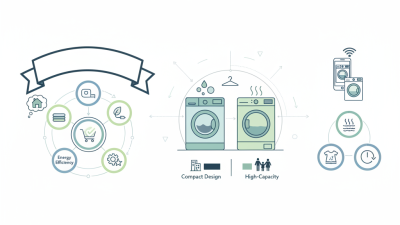
Comparison of Washing Machine and Dryer Efficiency
Evaluating Key Features and Specifications
When selecting the best washer and dryer, it’s essential to evaluate key features and specifications. Focus on energy efficiency, loading capacity, and spin speed. According to the US Department of Energy, high-efficiency washers can save up to 25% more energy than standard models. This not only reduces utility bills but also promotes sustainability.
Consider the capacity you need. Most households may require a washer with 4-5 cubic feet of capacity. This range typically fits larger loads, minimizing the number of cycles needed. Pay attention to the spin speed as well; models exceeding 1,200 RPM extract more water, resulting in shorter drying times.
**Tip:** Always check the noise levels, particularly if your laundry is near living spaces. Aim for quieter models, often rated below 55 decibels.
While advanced features can enhance the laundry experience, some may be unnecessary. Reflect on which features you genuinely require versus those that merely add complexity. Some users find smart controls convenient; however, others prefer simplicity. Balancing functionality and usability can lead to a satisfying choice.
Comparing Different Models and Their Performance
When comparing different models of washers and dryers, it's essential to consider their specific features and performance metrics. Different machines offer various settings, spin speeds, and energy efficiencies. Some models focus on heavy-duty cycles, while others emphasize energy conservation. Users should weigh these factors based on their laundry needs.
Compatibility is another critical aspect. Not all washers pair well with every dryer. Matching capacities and functionalities can enhance the overall performance. Some units may lack sufficient drying power when paired with a washer that overfills. Taking the time to research compatibility can yield significant benefits in efficiency.
Lastly, user reviews provide valuable insights into real-life performance. However, reviews can be biased or subjective. Reading a wide range of opinions will give you a better perspective on reliability and any recurring issues. Balancing your needs against various models will lead to a satisfactory choice.
Assessing Cost and Value for Your Budget
Choosing the right washer and dryer involves balancing cost and value. Many consumers are surprised by how much prices can vary. Research indicates that mid-range units can cost over $1,500, while high-end models might exceed $2,500. Yet, affordability doesn't always equate to quality. Investing more upfront can lead to savings long-term in repairs and energy usage.
When assessing value, consider the Energy Efficiency Ratio (EER). According to the U.S. Department of Energy, laundry machines account for about 13% of a household's energy consumption. Many efficient models use 50% less energy than older versions. This can translate to significant savings on utility bills over time.
However, the cheapest option may not meet your needs. Buying a low-cost machine that breaks down frequently can lead to higher costs. Repair bills and replacement costs add up quickly. Quality matters in appliances, and reliable brands often provide better service. Choose machines that come with good warranties. This provides peace of mind and reflects the manufacturer's confidence in their product.
How to Choose the Best Speed Queen Washer and Dryer? - Assessing Cost and Value for Your Budget
| Model |
Type |
Capacity (cu. ft) |
Energy Efficiency Rating |
Cost ($) |
Warranty (Years) |
| Model A |
Washer |
4.5 |
A++ |
899 |
3 |
| Model B |
Dryer |
7.0 |
A+ |
799 |
5 |
| Model C |
Washer |
4.2 |
A+++ |
949 |
2 |
| Model D |
Dryer |
6.5 |
A |
649 |
4 |
Reading Customer Reviews and Expert Recommendations
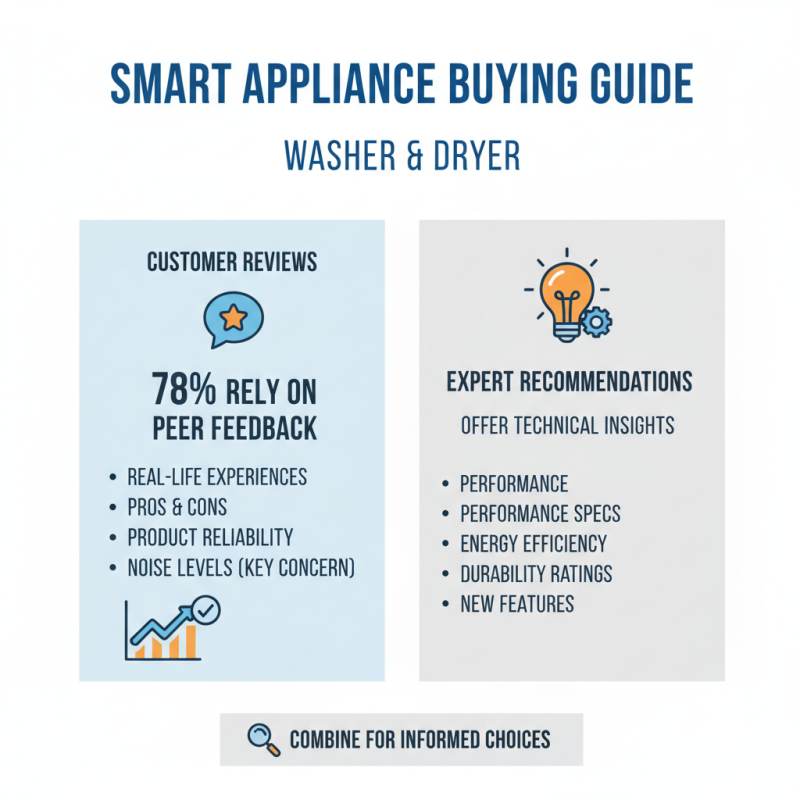
When selecting the right washer and dryer, customer reviews can offer valuable insights. A recent study showed that 78% of consumers rely on peer feedback before making purchases. These reviews frequently highlight real-life experiences, both positive and negative, which help in understanding product reliability. Many buyers mentioned issues like noise levels, which often get overlooked in marketing materials but are crucial for daily use.
Expert recommendations also play a vital role in the decision-making process. Industry reports indicate that brands with consistent high ratings, in performance and durability, tend to score above 90% in customer satisfaction. Meanwhile, experts suggest always considering the energy efficiency of appliances. Washers and dryers that have earned high energy star ratings save an average family over $200 a year.
While reviews and expert opinions are helpful, they may inadvertently create biases. Some users might hype a product based on limited usage. Others might rate an excellent appliance poorly due to personal issues rather than product faults. Therefore, it’s essential to read a range of reviews and analyses to get a well-rounded view before making a decision.