7 Stacked Washer Dryer Buying Tips for Global Buyers
A stacked washer dryer can turn a narrow laundry closet into a hardworking wash station, but a neat footprint does not guarantee a good fit. Global buyers need to compare more than price and appearance. Measure the doorway, closet depth, and ceiling height, then check whether the unit’s doors can open without hitting a wall. Leave room for hoses, ventilation requirements, and routine service. One missed measurement can turn delivery day into an expensive puzzle.
Before choosing a model, compare capacity, cycle options, controls, energy and water use, and local service support. A large drum may help a family wash bulky bedding, while a compact model may suit an apartment with limited space. Check voltage and installation specifications for the destination market; product versions can differ between regions. “Measure the space, confirm the connections, and plan for service before you buy.” — Alex Morgan, appliance-selection specialist. Treat that as a practical buying principle, not a verified published quotation; confirm specific claims with the manufacturer.
This guide covers seven checks for comparing stacked washer dryer models across global markets. It also considers delivery access, warranty coverage, and replacement-part availability. Details matter. Still, no checklist can predict every household’s laundry habits or local service experience. Buyers should verify the final specifications with the seller and installer, especially when importing a unit. A careful comparison takes time, but guessing can cost more.

Understanding Stacked Washer-Dryer Types and Configurations
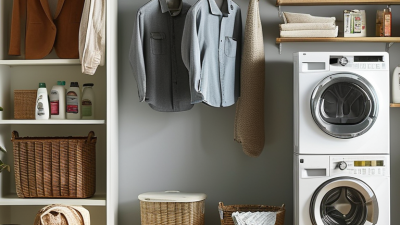
Stacked washer-dryer systems generally come in two forms: a laundry center built as one unit, or separate machines designed to stack. A laundry center can simplify delivery and installation, but its paired appliances may offer fewer capacity choices. Separate front-load units usually allow more flexibility. Check the dryer’s control position, door swing, and stacking-kit requirements before ordering.
Fit is only part of the decision. Measure the doorway, stair turns, closet depth, and space for hoses and ventilation. Check the plumbing. A compact model may fit neatly but struggle with bulky bedding.
ENERGY STAR reports that certified clothes washers use about 20% less energy and 30% less water than standard models. Its heat-pump dryer guidance reports roughly 30% lower energy use than conventional dryers. These figures depend on test methods and local conditions, so compare the rating label available in your market.
Configurations also differ by drying technology. Vented dryers exhaust warm, moist air outdoors and need a suitable duct route. Condenser models collect moisture, while heat-pump models reuse heat and usually need no external exhaust.
Still, “stackable” does not guarantee a safe, compatible pairing. Match the manufacturers’ specified dimensions and stacking hardware, then confirm electrical supply and drainage. Small details matter. A few centimeters can decide whether the doors open fully or block a walkway.
Measuring Space, Capacity, and Utility Requirements
Measure the installation area at floor level, halfway up the wall, and near the ceiling. Walls and trim can make the opening narrower than it appears. Check the full height, including any overhead cabinets, and leave the clearances specified in the installation manual. Measure doorways, hallways, and stair turns too; the appliance must reach its final position. Measure twice.
Capacity matters just as much as fit. A household washing bulky bedding may need a larger drum than a household washing mostly everyday clothes. Compare washer capacity and dryer capacity separately, since they are not always equal. Think about your usual load size, not only the biggest load you might wash once a year. Small details matter.
Before purchasing, confirm the required water connections, drain location, electrical supply, and dryer venting method. Requirements vary by model and market, so check the product specifications and ask a qualified installer if anything is unclear. In some homes, an existing outlet or vent may not match the appliance’s needs. That is easy to overlook, and a tape measure cannot catch it. Allow space to reach shutoff valves and clean the lint filter without moving the unit. These checks take time, but they can prevent installation delays and awkward daily use.
Comparing Wash Programs, Drying Performance, and Energy Use
Wash programs should match the laundry you actually handle, not just look impressive on a control panel. A quick cycle suits a few lightly soiled shirts, but it may use more energy per kilogram than a full eco wash. Eco programs often run longer. That is normal: lower wash temperatures can reduce electricity use while extending cycle time. Small loads matter. Avoid choosing a machine based only on its number of programs; check which settings adjust temperature, spin speed, and rinse options.
Drying performance depends on more than the advertised capacity. Compare the dryer’s rated load with the washer’s, since a full wash may need to be split for drying. Moisture sensors can stop a cycle when clothes are dry, while timed settings may keep running longer than needed. Not always. Thick towels and mixed fabrics can dry unevenly, especially when airflow is restricted. Clean the lint filter regularly, and leave room for air to circulate around the stacked units.
For energy use, compare the kWh figures on the same region’s official energy label; test methods can differ between markets. Look at both wash-only and wash-plus-dry figures if available. A heat-pump dryer may use less electricity, though its cycle can take longer and its purchase cost may be higher. The cheapest cycle is not automatically the best fit. Think about your usual load size, local electricity costs, and whether you need clothes ready quickly.
Checking Safety Standards and Regional Compatibility
Before comparing capacity or cycle times, confirm that the washer and dryer meet safety requirements in the destination market.
IEC 60335-2-7 covers household washing-machine safety; IEC 60335-2-11 covers tumble dryers. These standards are useful reference points, but local certification and labeling rules still matter. Check the product’s rating plate for voltage, frequency, and rated current. A unit designed for one electrical supply may not operate safely or correctly on another. Also verify that the available outlet, circuit, plug, and installation clearances match the manual. Small details matter.
Regional energy labels are not directly interchangeable.
The U.S. EPA’s ENERGY STAR guidance reports that certified clothes washers use about 20% less energy and 30% less water than standard models. Treat that as a U.S. benchmark, not a guarantee for every stacked washer-dryer or overseas market. Compare the local label’s test basis and annual-use figures instead. For vented dryers, confirm that the home can accommodate the specified exhaust route; for ventless models, check drainage and room ventilation requirements. I would recheck the manual against the actual laundry nook, because measuring only the appliance footprint can miss door swing or service access. That oversight is easy to make.
Evaluating Suppliers, Warranty Coverage, and Delivery Terms
For global buyers, a supplier’s polished catalog is only a starting point. Ask for recent production references, factory quality checks, and test records for the exact stacked washer-dryer configuration. Confirm capacity, voltage, frequency, plug type, and required installation clearances in writing. Small mismatches can delay a shipment or make units unsuitable at the destination. I have seen buyers focus on price and overlook document details; that is an easy mistake to repeat.
Tips: Request a sample warranty before ordering. Check whether it covers parts, labor, and international shipping. Ask who handles service claims and how quickly replacement parts can leave the warehouse. Get delivery dates, packaging standards, and damage-claim steps in writing.
Compare the full delivery terms, not just the quoted freight cost. Confirm who arranges export documents, insurance, customs clearance, and final delivery to your facility. Clarify whether unloading is included; a truck arriving without suitable equipment can create extra charges. Build in time for inspection, especially when several units arrive together. Warranty language may sound reassuring, yet exclusions can be broad. Read the actual terms and ask for unclear points to be revised before payment. A written answer is more reliable than a verbal promise.