Top Tips for Choosing a Stacked Washer Dryer Combo Today?
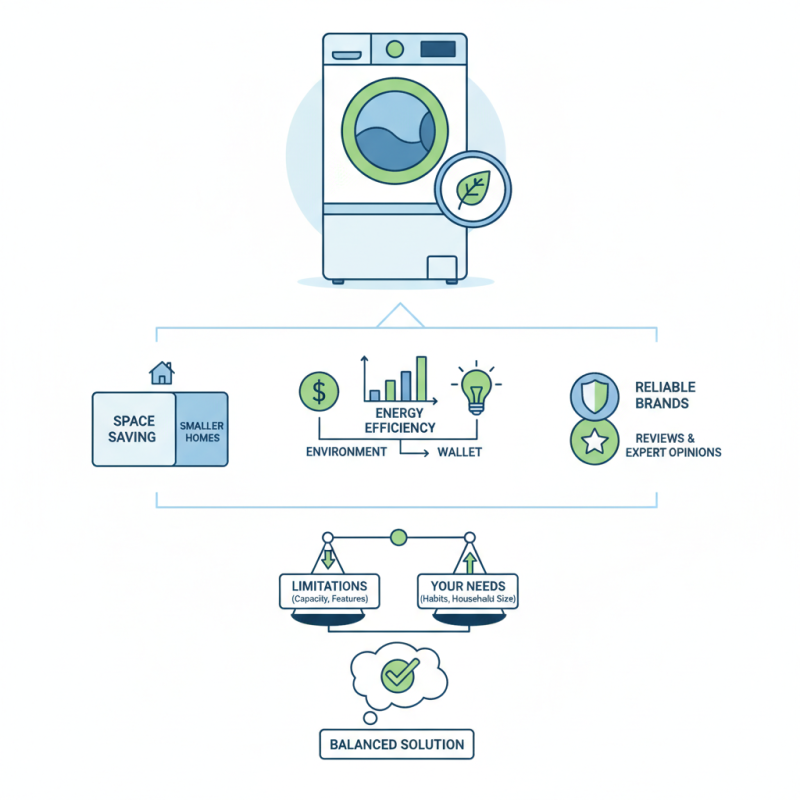
Choosing the right stacked washer dryer combo can be daunting. Many factors influence your decision. The combination of washing and drying in one unit saves space, which is crucial for smaller homes.
Look for energy efficiency in your stacked washer dryer combo. This choice benefits both the environment and your wallet. Reliable brands often provide better performance and longevity. Read reviews and seek expert opinions to guide your selection.
However, not all models are perfect. Some may have limitations in capacity or features. It’s essential to weigh these imperfections against your specific needs. Don’t forget to consider your laundry habits and the size of your household. A thoughtful approach will help you find a balanced solution.
Understanding the Basics of Stacked Washer Dryer Combos
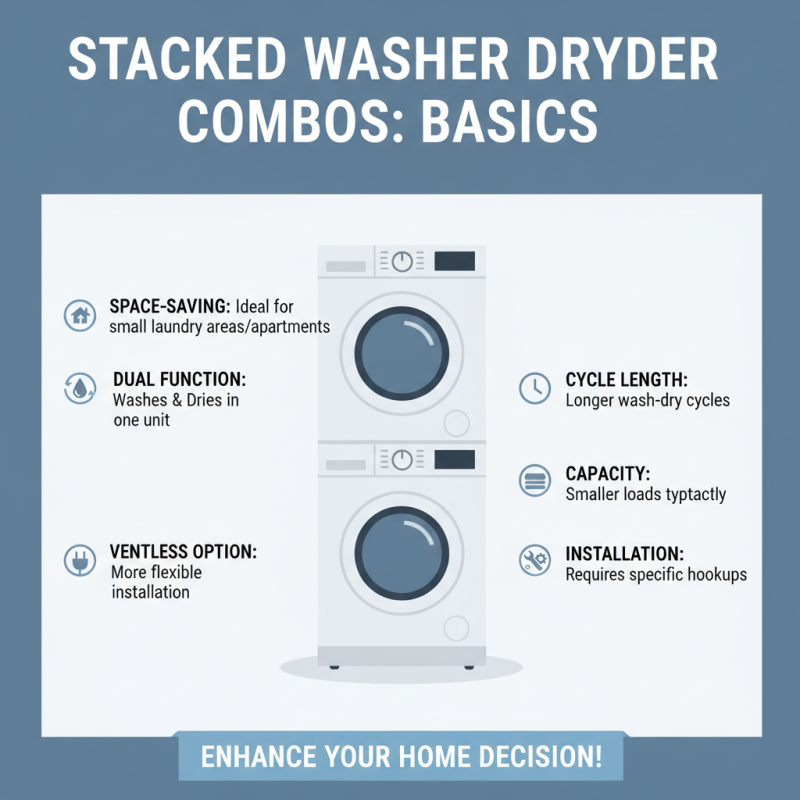
When considering a stacked washer dryer combo, understanding the fundamental aspects can greatly enhance your decision. Stacked units save space. Many urban homes lack laundry space. A compact model can fit into a closet while providing full functionality. According to the U.S. Department of Energy, appliances that combine washing and drying functions typically use 50% less water and energy than separate units.
Choosing the right combo also involves understanding the features. Consider load capacity, which averages between 2.0 to 4.5 cubic feet. Many users find that smaller capacities lead to more frequent loads, which can be inconvenient. The average cycle time for these units ranges from 60 to 90 minutes, affecting daily schedules. Noise levels vary, too; some units exceed 60 decibels. This noise could disrupt your home environment.
Finally, be aware of maintenance needs. Over time, filters can clog, reducing efficiency. Check how easy it is to access these components. Regular maintenance can prevent costly repairs later. User reviews often highlight this aspect, emphasizing the importance of careful consideration. The combination of efficiency and convenience makes stacked washer dryer combos appealing, but they require informed choices for optimal use.
Evaluating Capacity and Load Size for Your Household Needs
When evaluating capacity and load size for a stacked washer dryer combo, understanding your household needs is crucial. Research indicates that a typical family requires at least 4.5 cubic feet for washers to manage weekly laundry loads effectively. This capacity accommodates bulkier items like bedding and jackets. Yet, many consumers overlook their specific requirements, causing frustration during heavy laundry days.
It's also important to consider load size. Industry studies reveal that the average household generates about 10-12 loads of laundry per week. This translates to about 15-20 pounds of laundry each time, depending on fabric types and family size. Smaller households may operate just fine with 3.5 cubic feet of capacity. Here, you may want to reflect on your laundry habits and evaluate whether that smaller option could suffice.
Washing efficiency matters, too. Models that provide high-efficiency settings can save water and energy. This can be a major consideration, especially in areas with limited resources or high utility costs. Assessing the actual load size can prevent a mismatch with your unit's capabilities, ensuring your laundry process remains smooth. Aim for balance; oversizing may waste energy, while undersizing could lead to longer wash cycles and repeated loads.
Capacity and Load Size Evaluation for Stacked Washer Dryer Combos
Exploring Features and Functions for Optimal Performance
When selecting a stacked washer dryer combo, it's essential to focus on the features that enhance performance. Efficiency is key. According to the U.S. Department of Energy, ENERGY STAR appliances can reduce energy costs by up to 50%. Look for models with this certification. Not only do they save energy, but they also lower utility bills over time.
Another critical feature is load capacity. Most models range from 2.4 to 5.0 cubic feet. Evaluate your laundry needs carefully. Too small a capacity can lead to multiple cycles, which uses more water and energy. Also, consider wash cycles and drying options. Some machines offer specialized cycles for delicates or large items, optimizing fabric care while ensuring thorough cleaning.
Sound levels are often overlooked. Industry reports highlight that quieter models can operate at 60 decibels or lower. This can make a significant difference in small living spaces. However, balancing noise with performance is tricky. High-performance machines may generate more noise during operation. Ensure to read customer reviews for real-world insights. This can guide your decision-making process effectively.
Considering Energy Efficiency and Cost-effectiveness in Your Choice
When selecting a stacked washer dryer combo, energy efficiency and cost-effectiveness should be at the forefront of your decision. According to the U.S. Department of Energy, appliances that are ENERGY STAR certified use about 20% to 50% less energy than standard models. This can lead to significant savings on your utility bills over time, especially for households that do a lot of laundry.
Gathering information from industry reports shows that a high-efficiency washer can save a family of four approximately $100 annually in electricity costs. Keep in mind that upfront price is important, but operating costs will impact your budget significantly in the long run.
Consider these tips: Look for models with moisture sensors; they can reduce drying time and save energy. Inspect labels for water usage rates, as washers that consume less water are often more efficient overall. Also, some units offer eco-friendly modes; these settings may extend wash cycles but reduce energy consumption. Remember, assessing your personal needs versus potential cost savings is crucial. Not every combo will be perfect for every home. Finding balance takes time and careful thought.
Top Tips for Choosing a Stacked Washer Dryer Combo Today
| Model |
Energy Efficiency Rating |
Cost ($) |
Load Capacity (lbs) |
Cycle Options |
| Model A |
Energy Star |
900 |
12 |
Delicate, Normal, Heavy |
| Model B |
Energy Star |
950 |
15 |
Quick, Eco, Custom |
| Model C |
Energy Star |
750 |
10 |
Normal, Heavy, Sanitize |
| Model D |
Energy Star |
890 |
13 |
Wool, Quick, Normal |