Choosing a China Top Indoor Trampoline Park Design Manufacturer requires more than comparing prices or viewing attractive renderings. The right partner must connect creative planning with safe engineering, reliable production, and practical installation. This is the central purpose of Indoor Trampoline Park Design Manufacturing.
Jeff Platt, former CEO of Sky Zone and an experienced indoor recreation executive, once said, “We’re in the business of creating memories.” That idea matters during design decisions. A successful park needs more than colorful walls and impressive jumping zones. It needs clear sightlines, shock-absorbing surfaces, secure anchor points, and comfortable circulation paths. Parents should see their children easily. Staff should reach every activity area quickly.
Experienced manufacturers usually begin with the building itself. Ceiling height, column locations, emergency exits, ventilation, and floor loading can change the entire plan. A responsible team studies these details before proposing equipment. It also explains material specifications, inspection procedures, maintenance needs, and applicable safety requirements. Good communication reduces expensive surprises.
Still, no manufacturer is perfect. A beautiful concept may fail when installation conditions change. A low quotation may exclude testing, replacement parts, or staff training. These weaknesses deserve honest discussion. Buyers should request factory evidence, project references, technical drawings, and documented quality controls.
China offers broad manufacturing capacity and flexible customization. However, experience varies widely. The strongest suppliers combine engineering knowledge with responsive project management. They understand that every park serves a different community, budget, and operating model. Careful evaluation can turn an empty commercial space into a safer, more memorable destination. Safety remains the part that should never be treated as decoration.
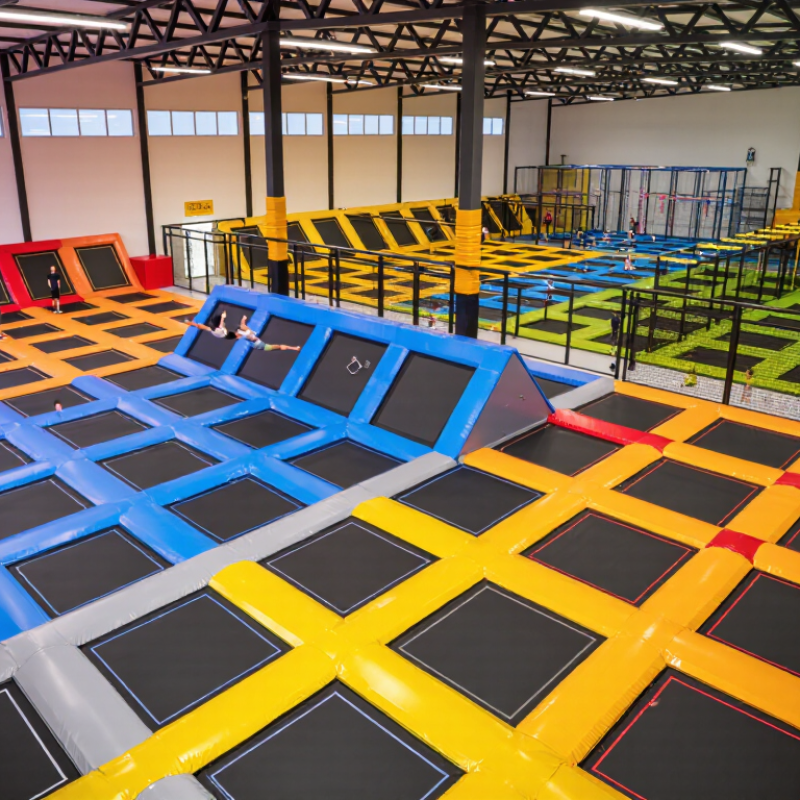
What defines a top indoor trampoline park design manufacturer in China? Practical experience matters. A capable team studies visitor flow, ceiling height, fire exits, supervision points, and maintenance access before drafting colorful layouts. ASTM F2970-22 provides important guidance for trampoline court design, installation, operation, and inspection. A reliable manufacturer should show how its drawings reflect these requirements. It should also provide load testing records, material specifications, installation procedures, and staff training documents. Grand View Research’s recent industry analysis projects strong growth for the global trampoline park market, with double-digit expansion expected through the decade. Growth creates pressure. Poor planning becomes expensive when visitor numbers rise.
Tips: Ask for a complete technical package. Check foam density, spring protection, anchor details, and replacement schedules. Request references from projects with similar floor areas. Independent inspection is valuable, even when the supplier seems experienced.
Good design is not only about more attractions. It is about safe spacing, clear sightlines, durable surfaces, and simple daily checks. A four-meter slide may attract attention, but a hidden blind corner can challenge supervision. Experienced manufacturers can calculate capacity and evacuation routes for each zone.
They should adapt designs to local building conditions and operating habits. No design is perfect. Some teams still overuse bright colors and underestimate cleaning access. That mistake deserves honest review. IAAPA’s global economic impact research shows the attractions sector supports substantial visitor spending and employment, making operational reliability commercially important. A dependable Chinese manufacturer combines engineering evidence, tested materials, factory quality control, and responsive after-sales support.
Designing an indoor trampoline park requires more than colorful layouts and exciting equipment. It demands coordinated engineering from the first site survey.
An experienced manufacturer studies ceiling height, floor capacity, access routes, and emergency exits before developing the concept. Designers then divide the venue into age-appropriate zones, including trampolines, foam pits, climbing elements, and spectator areas. Each attraction needs clear circulation and controlled entry points. Small details matter.
Our engineering team prepares layout drawings, structural calculations, anchoring plans, and installation instructions. We consider dynamic loads, impact protection, ventilation, lighting, and maintenance access. Padding must fit tightly around frames, while exposed edges need careful protection. Materials should be documented and selected for repeated commercial use. Local building, fire, accessibility, and safety requirements must guide every decision.
Practical experience often changes the original plan. A visually impressive feature may create blind spots or slow evacuation. An ambitious layout may leave too little space between activities. We review these weaknesses before construction, although no design process is perfect. Site conditions can also differ from drawings. That is why accurate measurements, factory inspections, installation supervision, and final safety checks remain essential. Clear technical communication helps operators maintain the park safely after opening.
A typical indoor trampoline park project combines concept planning, layout development, structural coordination, safety engineering, and construction documentation. The chart shows an illustrative allocation of design coordination effort across core service areas, excluding company or brand-specific data.
Planning benchmark: percentages represent the relative attention commonly required by each workstream and may vary by site size, local codes, program complexity, and permitting requirements.
When evaluating a China-based indoor trampoline park design manufacturer, safety should extend beyond attractive renderings. A reliable team converts site surveys into tested layouts, clear evacuation paths, controlled jump zones, and visible staff access. The design should reflect user ages, expected visitor numbers, ceiling height, and local inspection requirements.
Standards matter. Depending on the market, references may include ASTM F2970, EN 1176, or other applicable requirements. Materials must resist repeated impact, abrasion, sweat, and daily cleaning. Frames should use durable steel with protected surfaces. Landing areas need resilient foam, secure covers, and carefully finished edges. Stitching, seams, anchors, and net connections deserve equal attention.
Quality control should begin before production. Inspectors can check steel dimensions, weld consistency, foam density, fabric strength, and component labeling. Factory records should support sample testing, installation checks, and final inspections. A practical team also reviews maintenance access, because hidden damage is easy to miss. No factory is flawless. The important question is whether it identifies failures honestly and corrects them quickly. A rushed installation can still weaken a well-designed park. That risk needs careful review.
Customization, production, and installation should work as one connected process. An experienced manufacturer begins with the venue, not a fixed template. Ceiling height, entrance flow, columns, emergency routes, and visitor age groups all influence the design. Professional designers can create detailed layouts, 3D visualizations, and equipment schedules before production starts. This reduces costly changes later.
Production quality depends on controlled materials and clear inspection steps. Steel frames should receive suitable surface treatment, while padding, nets, flooring, and fasteners need consistent specifications. Reliable suppliers provide material records, assembly drawings, and factory inspection reports.
During installation, trained technicians check anchor points, protective gaps, platform levels, and connection strength. Local safety requirements must guide the final inspection. A beautiful park is not enough.
Tips: Ask for a site survey, production timeline, installation checklist, and maintenance plan. Request photos of similar projects, but inspect the details carefully. Small gaps matter. A perfect design rarely exists on the first attempt. Some early ideas may look exciting but create difficult supervision zones or expensive repairs. Honest manufacturers should explain these weaknesses and adjust the plan, instead of promising everything will be effortless.
China Top Indoor Trampoline Park Design Manufacturer?
How to Evaluate and Select the Right Manufacturer
Choosing an indoor trampoline park manufacturer requires more than comparing prices. Review their completed projects, design drawings, and installation records. Ask for evidence. Visit a working facility if possible. Watch how staff move between trampolines, foam pits, climbing areas, and emergency exits.
A qualified manufacturer should explain load calculations, frame materials, padding density, anchoring methods, and fire-resistant finishes. Request test reports and production quality records for every major component. Their engineers should understand local building codes, ventilation needs, accessibility, and visitor capacity. Details reveal competence. A clear layout should also show sightlines, staff stations, and cleaning access.
Do not judge reliability from polished images alone. Contact previous clients and ask about delivery delays, replacement parts, maintenance support, and communication after installation. A detailed contract should define materials, tolerances, training, warranties, and acceptance standards. Cheap proposals often omit essential services. That can become expensive later. No evaluation is perfect; I would still allow room for design changes after a site survey. Floor height, column positions, and power capacity may differ from the original drawings. The best manufacturer responds with documented revisions, realistic schedules, and safety-focused decisions rather than vague promises.
| Evaluation Dimension | Suggested Weight | What to Verify | Practical Benchmark | Common Warning Signs | Score (1–5) |
|---|---|---|---|---|---|
| Safety Design and Compliance | 25% | Review design risk assessments, impact protection, fall zones, access control, emergency exits, fire-safety coordination, and inspection procedures. | The proposal identifies applicable local building, fire, electrical, and amusement-safety requirements and provides documented testing or inspection records for critical components. | Vague safety statements, no risk assessment, insufficient padding details, or a design that ignores local fire and occupancy requirements. | __/5 |
| Relevant Project Experience | 15% | Ask for completed indoor recreation projects with similar floor area, ceiling height, visitor capacity, age groups, and activity mix. | At least three verifiable projects with photographs, layout drawings, operating references, and information about project scope and completion date. | Only concept images are provided, references cannot be contacted, or previous projects are unrelated to trampoline parks. | __/5 |
| Design Capability and Space Planning | 12% | Evaluate traffic flow, sightlines, spectator areas, reception, lockers, party rooms, staff zones, maintenance access, and evacuation routes. | The layout separates active and non-active areas, supports efficient supervision, minimizes congestion, and includes accurate dimensions and equipment clearances. | Poor circulation, blind spots, unrealistic capacity assumptions, or layouts that leave no practical maintenance access. | __/5 |
| Product Quality and Materials | 12% | Check steel specifications, welding quality, foam density, pad thickness, trampoline fabric, netting, fasteners, flooring, and replacement-part availability. | Materials have clear specifications, suitable wear resistance, consistent finishing quality, and a documented replacement schedule for high-wear parts. | Unspecified materials, inconsistent dimensions, low-density padding, exposed edges, corrosion-prone parts, or no spare-parts plan. | __/5 |
| Customization and Engineering Support | 10% | Determine whether the manufacturer can adapt designs to irregular buildings, columns, low ceilings, structural constraints, and local operating requirements. | The supplier provides measured drawings, load information, installation details, revisions, and coordinated engineering documentation before production. | Fixed templates only, limited drawing revisions, no structural coordination, or unclear responsibility for site measurements. | __/5 |
| Manufacturing Quality Control | 8% | Review material receiving checks, welding inspections, dimensional checks, assembly trials, packaging controls, and final inspection records. | A documented quality-control process exists, with inspection checkpoints, traceable specifications, corrective-action records, and pre-shipment verification. | Quality depends only on visual inspection, no inspection checklist, inconsistent samples, or refusal to share quality procedures. | __/5 |
| Installation and Project Management | 7% | Confirm site survey procedures, installation crew qualifications, schedule control, coordination with contractors, commissioning, and handover documents. | The contract defines installation scope, milestones, site responsibilities, acceptance criteria, training, and procedures for correcting installation defects. | Unclear installation responsibility, no commissioning process, unrealistic lead times, or incomplete handover documentation. | __/5 |
| Warranty and After-Sales Service | 6% | Compare warranty coverage, response times, technical support, maintenance instructions, spare-parts pricing, and remote troubleshooting capability. | Warranty terms are written clearly, exclusions are defined, replacement parts are available, and service response times are stated in the agreement. | Verbal promises only, unclear warranty exclusions, no maintenance manuals, or difficult access to commonly replaced parts. | __/5 |
| Commercial Transparency | 5% | Compare the quotation structure, inclusions, exclusions, taxes, packaging, shipping, installation, certification, payment terms, and change-order costs. | The quotation is itemized and allows fair comparison between suppliers without hidden costs or ambiguous technical descriptions. | An unusually low price with major exclusions, unclear quantities, inconsistent specifications, or pressure for a large non-refundable payment. | __/5 |