China Top Washer Dryer Combo Manufacturers?

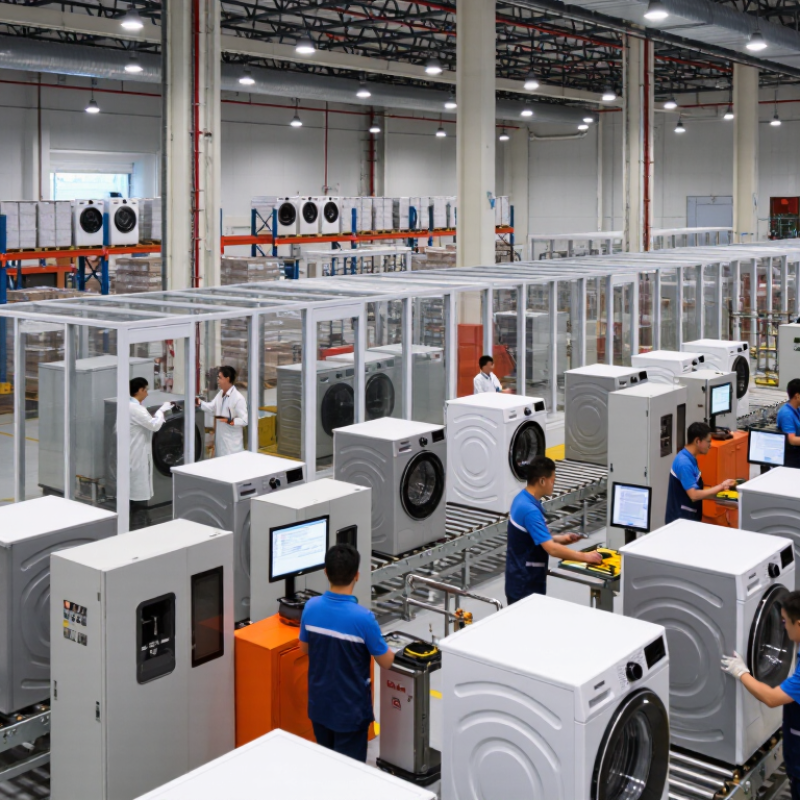
China has become a major production base for laundry appliances, including the washer dryer combo category. The National Bureau of Statistics of China reported annual washing-machine production above 100 million units in recent years. That scale supports strong supply chains, component access, and manufacturing experience.

Yet production volume does not automatically prove product quality. It is only one clue. Euromonitor International’s home-appliance research highlights the growing importance of energy efficiency, smart functions, and replacement demand. Meanwhile, the International Energy Agency continues to emphasize appliance efficiency as a practical tool for reducing household electricity consumption. These findings matter when comparing China’s leading manufacturers.

A serious review should examine more than factory size. It should assess motor technology, drying performance, water use, noise levels, drum capacity, software stability, and long-term service coverage. Haier, Midea, Hisense, TCL, and Little Swan are frequently discussed in China’s appliance industry. Their strengths are not identical.

Some focus on premium design. Others compete through cost and scale.

Independent certification also deserves attention. Relevant standards may include China Compulsory Certification, ISO 9001 quality systems, and market-specific energy requirements. Export buyers should verify current certificates directly. Product specifications can change.

This article compares China’s top washer dryer combo manufacturers through manufacturing capability, research investment, quality control, customization, export experience, and after-sales support. The ranking remains partly subjective. That is unavoidable. A supplier with impressive output may still provide inconsistent service in a distant market. Buyers should request test reports, sample units, warranty terms, and recent customer references before making a final decision.
China Top Washer Dryer Combo Manufacturers?

What Is a Washer Dryer Combo and How Does It Work?

A washer dryer combo places washing and drying inside one drum. It saves floor space, which matters in compact Chinese apartments and small utility rooms. During washing, the machine fills, tumbles, rinses, and spins clothing. During drying, it removes moisture through condensation or a heat-pump system. Warm air passes through the fabric, collects moisture, and sends condensed water to the drain. No external vent is usually required.

According to ENERGY STAR, certified clothes washers use about 20% less energy and 30% less water than standard models. ENERGY STAR also reports that certified heat-pump dryers use about 28% less energy than conventional dryers. These figures do not guarantee identical savings in every home. Load size, fabric thickness, water temperature, and electricity rates change results. In practical use, towels often need more time than shirts. The trade-off is easy to underestimate. One drum is convenient, but drying can take several hours.

Tips: Keep loads below the maximum drying capacity. A full washing load may be too large for efficient drying. Clean the lint filter and inspect the drain regularly. Use lower temperatures for synthetic fabrics. Leave space around the appliance for airflow. Professional testing should compare complete cycles, not isolated washing figures. That detail is sometimes missed.

Key Criteria for Evaluating Chinese Washer Dryer Combo Manufacturers

China Top Washer Dryer Combo Manufacturers?

Evaluating Chinese washer dryer combo manufacturers requires more than checking factory photos or export claims. Start with verified production experience, audited quality systems, and product testing records. ISO 9001 certification is useful, but it does not prove drying performance. Ask for recent third-party reports covering energy use, noise, leakage, and cycle stability.

Independent data matters. The International Energy Agency reports that appliances remain a major part of household electricity demand worldwide. Therefore, request measured consumption under recognized test conditions, not only laboratory marketing figures. The European Commission’s Ecodesign rules also emphasize repairability, efficiency, and product information. A reliable manufacturer should provide model-level data, spare-parts policies, and software support periods. UL, CE, or other market certifications should match the destination market and exact model.

Tips: Request three consecutive batch reports. Compare actual drying time with the advertised cycle. Inspect stainless-steel drum welds, door seals, filters, and vibration controls during a factory visit. A useful test includes mixed fabrics, towels, and a half-load cycle. Small details reveal process discipline. Ask how many warranty claims occurred last year, then verify the answer through records. Be careful with unusually low prices; they may reflect thinner insulation, weaker pumps, or limited testing. I would also challenge my own factory impressions, because a clean showroom can hide inconsistent production. According to consumer appliance research from NIQ, reliability and operating cost increasingly influence purchase decisions, making transparent after-sales data essential.

Leading Chinese Manufacturers and Their Product Strengths

China’s leading washer dryer combo manufacturers serve both domestic and export markets. Statista Market Insights estimates China’s household laundry appliance market will exceed US$20 billion in 2025. This scale supports strong component sourcing, automated assembly, and faster product testing. Large integrated manufacturers usually offer stable production, broad capacity options, and mature after-sales systems. Export-focused factories often provide flexible OEM and ODM development.

Their main strength is practical engineering. Many Chinese suppliers now produce heat-pump drying models, inverter motors, moisture sensors, and compact front-loading designs. The China Household Electrical Appliances Association reported continued growth in smart and energy-efficient appliance demand in its 2024 industry review. Suppliers with laboratories can test vibration, leakage, drying performance, and repeated door cycles before shipment. Ask for test records. Factory visits remain useful.

Not every product feels equally refined. Some touchscreens look impressive but add little value. Certain drying programs also need improvement with heavy cotton loads. The European Commission’s Ecodesign requirements have increased attention to energy use, repairability, and product information. Reliable manufacturers therefore publish efficiency data, spare-parts policies, and clear installation instructions. Smaller specialists can compete through quiet operation, narrow-depth cabinets, or customized control software. Performance varies. Buyer audits still matter.

How Chinese Washer Dryer Combos Compare in Features and Performance

Chinese washer dryer combos now compete through compact design, sensor control, and stronger drying programs. Their main advantage is space. One cabinet can replace two appliances in smaller apartments. China’s National Bureau of Statistics has reported washing-machine ownership near saturation in urban households. Replacement buyers therefore examine efficiency and convenience more closely.

Performance varies sharply between models. ENERGY STAR’s residential washer data shows certified efficient washers use about 20% less energy and 30% less water than standard models. This benchmark is useful, but it does not automatically describe every Chinese combo. Drying usually consumes more energy than washing. Heat-pump systems can reduce consumption, while conventional resistance heating often finishes faster. The difference appears clearly on the energy label and in real household bills. Small details matter. A full drum may need several hours to wash and dry.

Chinese models often provide steam refresh, fabric sensing, app alerts, and adjustable drying levels. These features are practical when laundry stays inside overnight. However, published capacity figures can mislead. A unit may wash ten kilograms but dry only six. The remaining wet clothes must wait. European Commission EPREL data highlights the value of comparing weighted energy use, water consumption, program duration, and rated capacity together. Independent testing is still necessary. Marketing language can sound precise, while drying results depend on fabric type, room temperature, and loading habits. I would also question short-cycle claims. Speed sometimes means damp cuffs, higher heat, or reduced load size.

China Top Washer Dryer Combo Manufacturers? - How Chinese Washer Dryer Combos Compare in Features and Performance

Comparison Dimension Entry-Level China-Made Combo Mid-Range China-Made Combo Premium China-Made Combo Practical Performance Interpretation
Typical wash capacity 7–8 kg 9–10 kg 11–13 kg Capacity is suitable for apartments, families, and larger households respectively.
Typical drying capacity 4–5 kg 6–7 kg 7–9 kg Combo units normally dry less than they wash; overloading can extend drying time and increase creasing.
Maximum spin speed 1,000–1,200 rpm 1,200–1,400 rpm 1,400–1,600 rpm Higher spin speed generally removes more water before drying, although fabric type and load balance also matter.
Drying system Condenser drying Condenser drying with sensor control Heat-pump drying or advanced condenser system Heat-pump systems use lower drying temperatures and usually consume less energy, but have a higher purchase cost.
Typical full wash-and-dry duration 5–8 hours 4–7 hours 3–6 hours Actual time varies with load size, fabric, selected temperature, spin speed, and moisture level.
Typical wash-water use 45–65 L per standard wash 50–70 L per standard wash 50–75 L per standard wash Front-loading designs typically use less water than traditional top-loading agitator machines.
Energy use in drying Higher; commonly about 3.5–5.5 kWh per full cycle Moderate; commonly about 2.5–4.5 kWh per full cycle Lower with heat-pump technology; commonly about 1.5–3.0 kWh per full cycle Energy figures depend strongly on the test program, load, ambient conditions, and local measurement standard.
Motor configuration Standard inverter or variable-speed motor Variable-speed inverter motor High-efficiency inverter motor with refined vibration control Inverter control supports smoother speed adjustment, lower standby losses, and improved spin stability.
Common wash programs 10–14 programs 14–20 programs 20–30 programs with adjustable options Core programs usually include cotton, synthetics, mixed fabrics, delicate items, wool, quick wash, rinse, and spin.
Automatic sensing Basic load and imbalance detection Load, moisture, temperature, and foam sensing Advanced load, moisture, fabric, temperature, and drying-level sensing Sensors can reduce over-drying and help optimize cycle duration, but they do not replace correct load selection.
Typical operating noise Wash: 55–62 dB
Spin: 72–78 dB
Wash: 50–58 dB
Spin: 68–75 dB
Wash: 45–55 dB
Spin: 65–72 dB
Noise depends on installation, floor rigidity, load balance, and the measurement method used.
Common safety functions Door lock, overflow protection, imbalance control Adds child lock, leak detection, foam control, and thermal protection Adds enhanced leak monitoring, automatic fault diagnosis, and overheat protection Exact functions vary by model and destination-market compliance requirements.
Connectivity Usually none Optional Wi-Fi or app control Wi-Fi, remote diagnostics, cycle notifications, and usage tracking Connectivity is useful for monitoring but does not directly determine washing or drying quality.
Typical cabinet width Approximately 595–600 mm Approximately 595–600 mm Approximately 595–650 mm Most front-loading units follow the widely used 600 mm appliance-width format, but depth can differ substantially.
Best fit for Budget-conscious users and small households Most families seeking a balance of capacity, features, and cost Frequent users prioritizing energy efficiency, fabric care, and automation The most suitable configuration depends on household size, available space, electricity cost, and drying frequency.

Note: The figures are representative ranges for China-produced front-loading washer dryer combos and are not tied to any specific company or brand. Actual specifications should be verified against the model’s technical datasheet and the energy-testing standard used in the target market.

How to Select a Reliable Manufacturer for Your Target Market

China Top Washer Dryer Combo Manufacturers: How to Select a Reliable Manufacturer for Your Target Market

Selecting a manufacturer requires more than comparing factory prices. In real projects, reliability appears during installation, testing, and after-sales service. Ask for test records based on IEC 60456, including washing performance, drying efficiency, noise, and water consumption. ENERGY STAR reports that certified clothes washers use about 20% less energy and 30% less water than standard models. These figures matter when your market has strict utility costs or sustainability expectations. Do not accept laboratory claims without independent verification.

Check whether the factory can adapt programs, voltage, plug types, labels, and user manuals for your target country. Review production capacity through recent shipment records, not only impressive showroom photos. The IEA’s Energy Efficiency Market Report highlights appliances as an important area for reducing household energy demand. Therefore, request measured standby consumption and complete-cycle data. Inspect the drum, door seal, pump, heating element, and control board. Small parts often create expensive complaints. ISO 9001 helps, but it cannot replace process audits. That point is easy to overlook.

Tips: Ask for three samples from different production batches. Run repeated wash-and-dry cycles with towels. Measure vibration on uneven floors. Review spare-parts availability for at least five years. Confirm response times for warranty claims. A low unit price can hide weak service costs. I have seen attractive samples perform well once, then fail under repeated drying. That possibility deserves honest attention.

How to Select a Reliable China Washer Dryer Combo Manufacturer

The chart compares the core compliance areas that should be verified before selecting a supplier for each target market. A higher number indicates more regulatory workstreams to confirm, including product safety, energy efficiency, EMC, labeling, environmental obligations, and market-specific registration. Always validate the latest requirements with the relevant authority before placing an order.