Why Choose Tatami Mat 4cm for Global Buyers?

Why Choose Tatami Mat 4cm for Global Buyers?

Tatami Mat 4cm offers a practical balance between comfort, stability, and traditional Japanese character. Its thicker profile feels noticeably softer under bare feet. It also provides more cushioning during floor-based activities, meditation, stretching, and low-seating arrangements. For overseas buyers, that added depth can make installation more forgiving on slightly uneven subfloors.

Kengo Kuma, a leading Japanese architect known for working with natural materials, has said, “Materials have memory.” This idea suits tatami. The surface carries texture, scent, and visual warmth into modern rooms. Yet appearance alone should not decide a purchase. Buyers should check the core material, surface weaving, edge finishing, moisture resistance, and dimensional tolerance. Ask for product samples. Touch matters.

The 4cm specification is useful, but it is not automatically superior. A dense, well-assembled mat may outperform a thicker product with weak internal structure. Weight, ventilation, and doorway clearance also require attention. A room can look beautiful and still feel inconvenient.

For global projects, suppliers should provide clear measurements, packaging details, care instructions, and consistent quality records. Confirm whether the mat suits residential, hospitality, studio, or commercial use. Local climate matters too. Humid environments may need better airflow and routine drying.

Small details decide comfort.

There is no perfect mat. Manufacturing tolerances happen, and natural materials can vary slightly. That imperfection deserves honest discussion. With careful sourcing, Tatami Mat 4cm can deliver dependable underfoot comfort, distinctive craftsmanship, and long-term value across many interior applications.
Why Choose Tatami Mat 4cm for Global Buyers?

What Is a 4cm Tatami Mat and How Is It Designed?

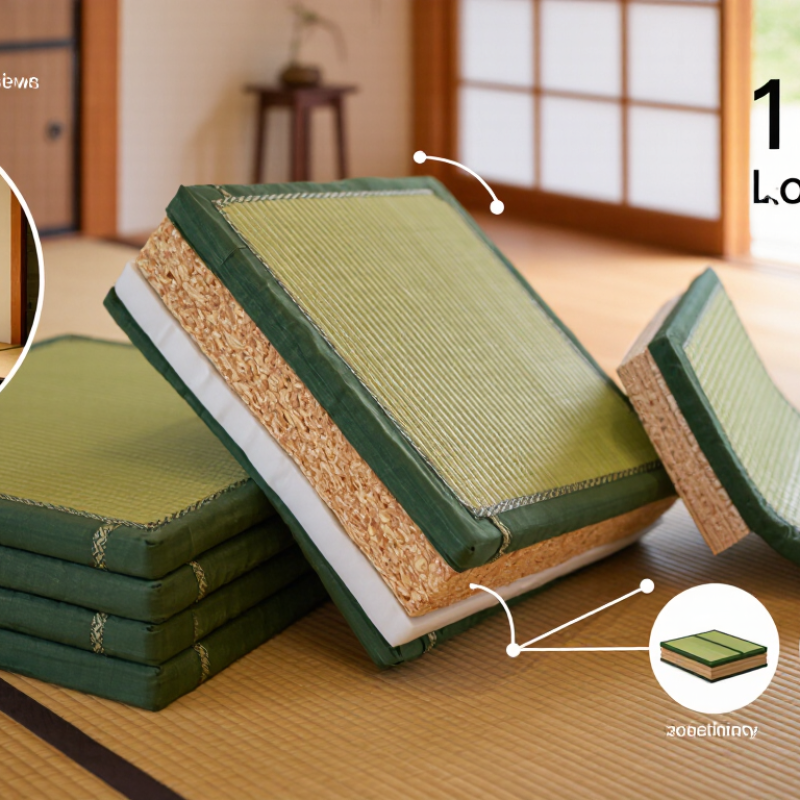
A 4cm tatami mat is a floor covering designed with a noticeably thicker, more supportive structure. Its stated thickness usually refers to the mat’s full height, including the core and surface covering. Many designs combine compressed plant fiber, foam, or layered board inside. The outer layer may use woven grass, paper fiber, or durable textile. This surface adds texture and helps protect the inner material. The 4cm profile can soften pressure under knees, feet, and low furniture. Not the whole story.

In practical use, I check the mat on a firm, level floor. A soft or uneven base can reduce stability and cause premature deformation. The internal core should resist compression without feeling rigid. Edges need accurate binding, especially when several mats form one room. Small gaps collect dust and can shift during movement. Some constructions include moisture-resistant layers, but no mat is completely protected from damp conditions. Ventilation still matters. That detail is often overlooked.

For global buyers, the design should be assessed beyond thickness. Ask for core materials, surface composition, size tolerance, weight, and care instructions. Request independent test information when available, including material safety and durability data. Packaging also deserves attention because pressure during shipping can affect corners. I would inspect samples for odor, flatness, seam quality, and recovery after light compression. A small tolerance is normal, but large variation deserves questions. Specifications can differ between production batches. I may still hesitate when technical details are vague. Measure twice.

Why Choose a 4 cm Tatami Mat for Global Buyers?

Common traditional tatami formats and their standard length-to-width dimensions

A 4 cm tatami mat is a relatively compact floor mat designed with a woven surface, a resilient internal core, and a protective backing. The 4 cm thickness provides a balance between cushioning, portability, stacking efficiency, and compatibility with indoor flooring. Traditional tatami formats vary by region: Kyo-ma is generally the largest, while Danchi-ma is more compact. Actual dimensions may vary slightly by supplier and production tolerance.

Key Benefits of Choosing a 4cm Tatami Mat

Why Choose Tatami Mat 4cm for Global Buyers?

A 4cm tatami mat gives users more cushioning than thinner floor coverings. It can soften pressure under knees, feet, and children’s hands. That matters in sitting rooms, meditation spaces, guest areas, and low furniture settings. The added thickness also helps reduce the feeling of a hard floor beneath the mat. In practical use, edge firmness matters as much as surface comfort. Poorly supported edges may compress after repeated stepping.

For global buyers, stable construction is essential. A reliable 4cm mat should have an even core, tightly finished edges, and a surface that resists everyday scuffing. Ask for dimensions, material details, weight, and care instructions before ordering. Measure twice. Room humidity can change performance. In coastal climates, ventilation helps prevent trapped moisture beneath the mat. In dry homes, sudden temperature changes may affect natural materials and surface texture.

The mat should also match the room’s purpose. A firm structure suits frequent walking, while a softer surface may feel better for floor seating. Requesting a sample can reveal odor, weave quality, edge alignment, and actual firmness. Photos often hide small defects. I have seen buyers focus on thickness and overlook door clearance or storage space. That mistake is easy to avoid. Leave enough room for doors, cleaning tools, and occasional lifting. A 4cm profile offers comfort, but it is not automatically suitable for every floor or household.

How 4cm Thickness Affects Comfort, Support, and Durability

Why Choose Tatami Mat 4cm for Global Buyers?

A 4cm tatami mat equals 40mm of cushioning underfoot. That extra depth can soften kneeling, stretching, and floor sleeping. It also reduces the sharp feel of hard flooring. However, thickness alone does not guarantee comfort. Foam density, surface weaving, and compression recovery matter just as much. ISO 2439 evaluates foam load-deflection behavior, showing why two mats with identical thickness can feel very different.

4cm = 40mm
Cushioning underfoot

Support is a balance, not maximum softness. A very soft mat may feel pleasant at first. It can also allow ankles, knees, or hips to sink unevenly. For sports flooring, EN 14904 specifies force-reduction performance between 25% and 75%. A household tatami mat is not automatically certified to this standard. Still, the range offers useful professional context for buyers comparing cushioning and stability. My practical view is simple: 4cm usually gives better pressure relief, but firm support remains essential.

Tips:

Check density, compression-set results, edge bonding, and moisture resistance. Ask for test documents, not only marketing claims. Inspect the mat after repeated folding or daily use. Small gaps can collect dust. Four centimeters may also increase door clearance and storage weight. That inconvenience is easy to overlook. Durability depends on ventilation, load distribution, and maintenance. No mat lasts forever, and I would question any claim promising permanent shape recovery.

Factors Global Buyers Should Check Before Purchasing

Why Choose Tatami Mat 4cm for Global Buyers?

A 4cm tatami mat offers a practical balance between support, portability, and floor protection. However, thickness alone does not prove comfort. Buyers should check core density, surface resilience, edge strength, and recovery after compression. A soft mat may feel pleasant at first, but it can flatten under daily use. I would request compression-test results based on ISO 2439 before placing a large order.

Material safety deserves equal attention. Ask for formaldehyde and VOC test reports from an accredited laboratory. The World Health Organization’s Guidelines for Indoor Air Quality set a formaldehyde guideline of 0.1 mg/m³ over 30 minutes. Also check the cover’s fiber content, dye stability, odor, and moisture resistance. A strong smell is not automatically dangerous, but it deserves investigation. Packaging should protect the mat from humidity during long-distance shipping.

Tips: Confirm the actual size after unpacking. Check whether 4cm includes the cover. Request photos of corners, seams, and underside surfaces. Verify fire-performance requirements in the destination market, because rules differ widely. Ask for batch records, care instructions, and a sample before mass production. One overlooked detail is ventilation: a dense mat placed on a damp floor may develop mold. Buyers should inspect the room, not only the product.

Shipping, Maintenance, and Usage Considerations for International Buyers

Why Choose Tatami Mat 4cm for Global Buyers?

For global buyers, a 4cm tatami mat balances comfort, stability, and manageable weight. Its thickness feels supportive underfoot without becoming excessively bulky. International shipping still requires careful planning. Measure doorways, elevators, stairs, and storage areas before ordering. Many 4cm mats travel flat, not rolled. Request packed dimensions, gross weight, pallet details, and delivery requirements. Confirm insurance coverage and customs responsibilities in writing. Import duties and local taxes may depend on the destination and shipping terms. Clear invoices and accurate material descriptions reduce avoidable delays. Even careful planning can miss an awkward staircase.

After delivery, let the mats adjust indoors before regular use. Keep them away from damp walls and direct, strong sunlight. Vacuum gently along the surface, then remove spills with a nearly dry cloth. Avoid soaking, steam cleaning, and harsh chemicals. Natural fibers may fade or develop odors in humid rooms. Ventilation matters. Small stains still happen. Lift mats instead of dragging them across the floor. Check the underside periodically for moisture, dust, or early mildew. A breathable underlay can help, but it should not trap water beneath the mat.

A 4cm mat suits bedrooms, reading spaces, children’s areas, and light exercise. It adds cushioning, but it is not certified impact protection. For martial arts or frequent training, inspect the subfloor and edge stability carefully. Uneven flooring can create pressure points and premature wear. Keep heavy furniture on stable, broad supports. Review the mat’s load limits and care instructions before installation. Comfort is not the same as protection. 天天爱彩票

Why Choose Tatami Mat 4cm for Global Buyers? - Shipping, Maintenance, and Usage Considerations for International Buyers

Evaluation Dimension Typical 4 cm Tatami Mat Data Why It Matters to International Buyers Practical Considerations
Thickness Approximately 40 mm Offers a balance between floor cushioning, stability, and manageable shipping volume. Allow extra clearance beneath doors, furniture, and floor-level storage units.
Common panel sizes Common formats include approximately 0.9 × 1.8 m and 1 × 2 m; actual sizes vary by supplier and region. Modular panels can cover rooms efficiently and simplify replacement or rearrangement. Confirm dimensions in millimetres or centimetres before calculating room coverage.
Approximate coverage One 0.9 × 1.8 m panel covers about 1.62 m²; one 1 × 2 m panel covers about 2 m². Helps buyers estimate the number of mats required for rooms, studios, and practice areas. Add a small allowance for cutting restrictions, irregular room shapes, or spare replacement pieces.
Typical construction Usually a compressed plant-fibre, wood-fibre, or synthetic core with a woven or fabric-like surface; construction varies. Core and surface materials affect weight, resilience, odour, moisture tolerance, and care requirements. Request material composition, edge details, fire information, and test documentation where required.
Weight and shipping volume Weight varies widely with core density, surface material, and panel size. The 40 mm thickness creates a fixed volumetric-shipping factor. International freight charges may be based on actual weight or dimensional weight, whichever is higher. Compare packed dimensions and gross weight, not only the product’s net weight.
Packaging protection Suitable protection commonly includes moisture-resistant wrapping, corner protection, and strong outer cartons or pallets. Long-distance transport exposes mats to compression, punctures, humidity, and handling damage. Specify palletisation, carton markings, stacking limits, and inspection procedures before shipment.
Container loading and storage Flat storage is generally preferred; prolonged bending or uneven stacking can deform rigid or semi-rigid panels. Correct loading reduces dimensional changes and damage during ocean, rail, or road transport. Keep cartons dry, off the floor, away from direct sunlight, and within the recommended stacking height.
Acclimatisation after delivery Allow mats to reach room temperature and humidity before final installation; the exact time depends on packaging and climate. Gradual acclimatisation helps reduce temporary expansion, contraction, and surface waviness. Open packaging in a clean, dry room and follow the supplier’s installation instructions.
Routine cleaning Use dry dusting, gentle vacuuming, or a well-wrung damp cloth according to the surface material. Regular low-moisture cleaning removes dust without saturating the core. Avoid soaking, steam cleaning, abrasive brushes, and harsh chemicals unless specifically approved.
Moisture and humidity Plant-fibre and many composite cores can absorb moisture; high humidity may increase mould and odour risk. Climate differences between exporting and importing countries can affect service life. Use in a dry, ventilated area, clean spills promptly, and periodically lift mats to inspect the underside.
Sunlight and ventilation Direct ultraviolet exposure can fade or age surface materials; ventilation helps release trapped moisture. Proper placement is important in homes, gyms, studios, and humid coastal regions. Use curtains or blinds where necessary and ventilate the room without exposing mats to rain.
Intended usage Suitable applications may include floor seating, bedrooms, meditation areas, cultural interiors, and light-to-moderate practice spaces. A 4 cm profile provides more cushioning than a thin decorative mat while remaining relatively stable under normal foot traffic. For martial arts, falls, or commercial heavy use, verify impact performance and use a system designed for that activity.
Slip and edge safety Slip resistance depends on the surface, floor type, installation pattern, and whether an underlay is used. Loose or misaligned panels can create trip hazards, especially in public or high-traffic areas. Use compatible connectors or anti-slip underlay and keep edges flush where possible.
Customs and import documentation Common documents may include commercial invoice, packing list, transport document, origin information, and any requested compliance reports. Documentation requirements, duties, taxes, and product regulations differ by destination country. Confirm the correct tariff classification and destination-specific requirements with a customs broker or local authority.
Expected service life There is no universal lifespan; durability depends on material, traffic, moisture, footwear, cleaning, and maintenance. A realistic lifecycle assessment is more useful than relying on a single fixed year estimate. Inspect seams, corners, surface wear, odour, and underside condition regularly; replace damaged panels promptly.

Note: Specifications, dimensions, construction, shipping weight, and care instructions vary by material and supplier. Buyers should confirm the final technical data and destination-country import requirements before placing an international order.