How to Choose a Commercial Washer and Dryer
Choosing a commercial washer and dryer is a decision about daily workload, not just machine size. A busy hotel may run loads from dawn until late evening, while a small apartment laundry room faces sharp weekend peaks. Brian Wallace, president and CEO of the Coin Laundry Association, brings a customer-focused industry perspective: equipment should fit the people and service it is meant to support. A useful rule for buyers is simple: “Choose for the busiest day, not the quietest one.”
Start by estimating loads per day, average load size, and available operating hours. Then compare washer capacity, cycle time, dryer performance, and expected utility use. A large drum can be the wrong choice if it sits half-empty; a small machine can create a queue that snakes past the folding tables. Measure the doorway and service clearances, too. It is an easy detail to miss.
This guide explains how to match equipment to your site, workload, and budget. It also covers durability, controls, maintenance access, and the support available from the supplier. Ask for clear performance data, warranty terms, and service response details. Do not rely on a sales claim alone. Your estimates may be imperfect; revise them after reviewing actual laundry records. That small pause can prevent an expensive mismatch.
Assess Laundry Volume, Load Types, and Daily Operating Needs
How to Choose a Commercial Washer and Dryer
Assess Laundry Volume, Load Types, and Daily Operating Needs
Start by tracking laundry for a typical week, including the busiest day. Count loads, note their size, and record when machines are occupied. A café may wash small, frequent batches of towels, while a lodging facility may handle sheets and bulky covers. These loads behave differently. Choose washer capacity for the items you actually process, not just the average basket. An average-day estimate can miss a sharp weekend rush.
Consider daily workflow as well as volume. If clean items must be ready before opening, cycle time and drying capacity matter. A washer that finishes quickly may still create a bottleneck if the dryer cannot keep pace. Check that bulky items can tumble freely, and account for space, power, water access, and dryer ventilation. Even careful estimates can be wrong; review them after a few weeks of operation.
Tips: Keep a simple load log for seven days. Note peak hours, item types, and unfinished loads. Ask staff which items are hardest to wash or dry. Their answers may reveal a mismatch that a spreadsheet misses.
How to Choose a Commercial Washer and Dryer: Assess Laundry Volume, Load Types, and Daily Operating Needs
Start by estimating the weight of each load type on a typical busy day. This illustrative planning example totals 103 kg of laundry per day; actual volumes vary by facility, occupancy, and service schedule.
Use peak-day volume—not just the daily average—to plan capacity. Separate towels, linens, uniforms, and cleaning textiles when their wash requirements differ. Then check that the washer and dryer can handle the total within your available operating hours and expected cycle schedule.
Select Washer and Dryer Types That Fit the Facility
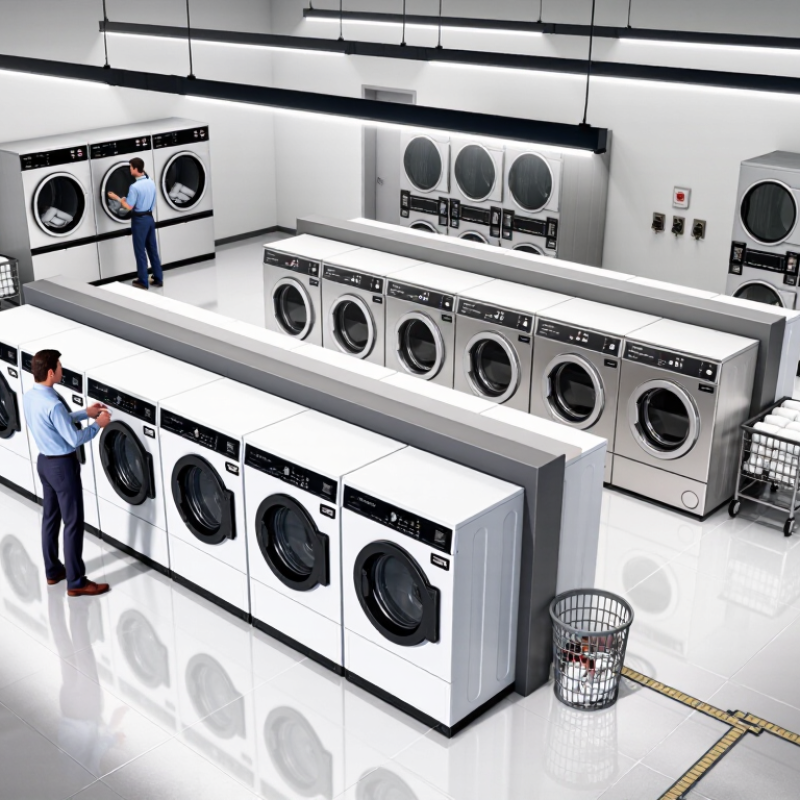
Choosing a commercial laundry setup starts with the room, not the catalog. Measure doorways, service clearances, and the route from soiled-linen carts to clean storage. Space is tight. A front-load washer often suits a narrow aisle and can be paired with a dryer above it. Side-by-side units make loading and maintenance access easier. Access matters.
Match the machine type to daily loads. A washer-extractor removes more water during spinning, which can shorten drying time for towels or uniforms. A standard commercial washer may suit lighter, predictable loads. For delicate items, flexible programs and controlled temperatures may matter more than maximum capacity. Oversizing sounds safer, but half-full drums can waste water and energy.
Check electrical service, water supply, drain capacity, and vent routing before choosing a dryer. A vented dryer needs a clear exhaust path. A ventless model may help where routing is difficult, but check its cycle times against daily demand. Compare expected loads per hour with actual shift patterns, not just rated capacity. Some room for growth is useful, though an oversized drum can leave smaller loads tumbling inefficiently.
Check Space, Utility Connections, Ventilation, and Installation Needs
Before comparing commercial washer and dryer capacities, measure the room and the route to it.
Record doorway widths, hallway turns, ceiling height, and the washer’s final position. A machine may fit on paper yet fail at a tight corner. Measure twice. Leave the clearances specified in the installation instructions, including space for doors, service access, and hoses. Check the floor, too: a large machine filled with water can place substantial weight on a small area. Ask a qualified installer to assess uncertain floors or unusual layouts.
Confirm utility connections at the exact installation point. Check electrical voltage, circuit capacity, outlet type, water supply, drain location, and any required gas connection. Do not assume an existing outlet or pipe is suitable; verify it against the machine’s specifications. For a vented dryer, measure the duct route and use the permitted duct material and length. Long, sharply bent ducts can restrict airflow and extend drying times. That matters. If using a ventless model, confirm its heat and moisture requirements still suit the room.
Think through delivery and installation before ordering. A site visit can reveal blocked shutoff valves, low ceilings, or a drain that sits too high. Even careful measurements can miss a protruding pipe. Keep access panels reachable, and have utility changes completed before delivery day. A little rechecking may feel fussy, but it is cheaper than discovering the mismatch after the machine arrives.
Evaluate Total Ownership Costs, Service, and Warranty Coverage
The purchase price is only the first line in a commercial washer and dryer budget. Estimate electricity, water, detergent, and routine labor using your actual weekly load count. Then compare that estimate with the expected service life. A lower-cost machine may use more water or need repairs sooner. Small differences add up.
Service access affects costs too. Ask how quickly a qualified technician can visit and whether common parts are kept nearby. A two-day wait sounds small. During a busy week, it can leave laundry piling up and staff waiting. Check service-plan fees, travel charges, and after-hours rates. I would also allow for downtime in the budget, though that number is easy to guess badly.
Read the warranty wording before signing. Confirm how long parts and labor are covered, and whether coverage applies to commercial use. Some warranties exclude problems linked to installation, water quality, or missed maintenance. Ask for those limits in writing. Keep service records and note who handles a claim. Do not assume a longer warranty covers more; the exclusions may matter more than the headline term.