Choosing a reliable stacking washer and dryer supplier in China requires more than comparing factory prices. Product safety, drying performance, assembly quality, and service support all affect the final purchase decision.
This guide examines ten notable Chinese suppliers through practical evaluation criteria. These include manufacturing experience, product range, export capability, quality control, certifications, and customer feedback. A dependable supplier should explain motor specifications, drum capacity, noise levels, energy use, and installation requirements clearly. Factory visits, sample testing, and production audits can reveal details that brochures often hide. A loose door seal or uneven frame may become an expensive problem later.
The selected companies may serve different buyers. Some focus on household appliances, while others support private-label or commercial projects. Their strengths may also vary by order volume, customization, delivery region, and after-sales assistance. No ranking remains perfect forever. Supplier data changes, product lines are updated, and online information can be incomplete. That limitation deserves attention.
Readers should verify certificates, test reports, warranty terms, spare-parts availability, and communication response before signing an agreement. Requesting a real sample is wise. Check the controls. Measure the depth. Run a complete cycle.
This overview aims to support informed sourcing decisions, not replace professional due diligence. By comparing these China-based manufacturers carefully, buyers can identify a stacking washer and dryer partner that fits their market, budget, and long-term operating needs.
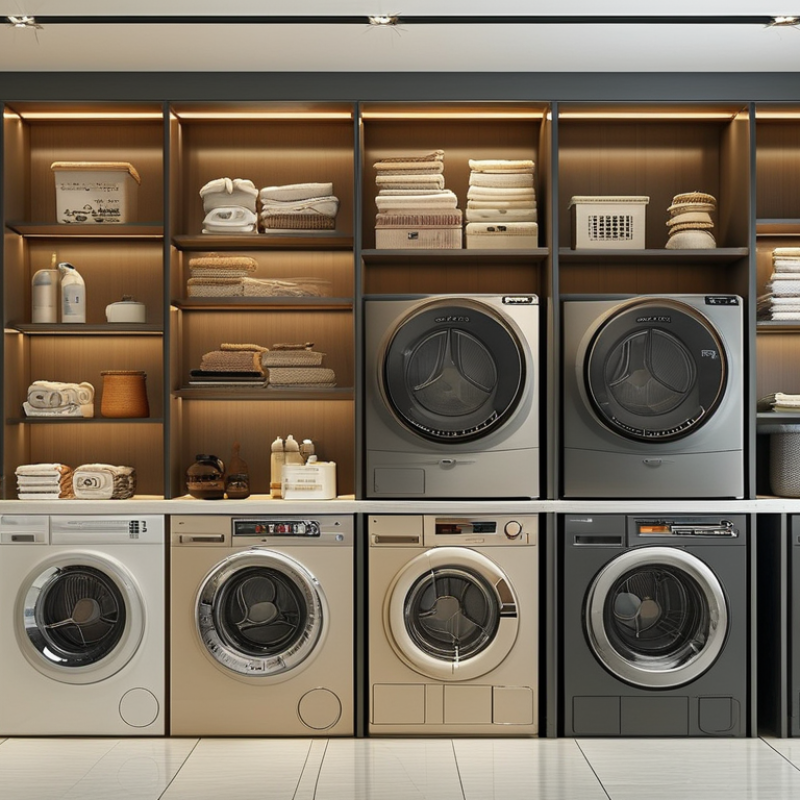
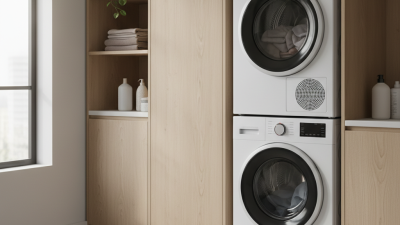
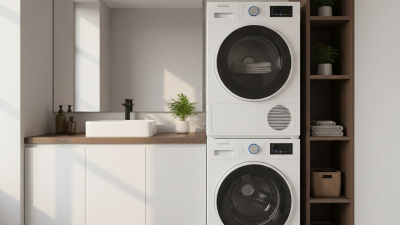
Stacking washer and dryer units place the dryer directly above the washing machine. This design saves floor space without removing full laundry functions. Most sets use a compatible stacking kit, reinforced brackets, and front-loading doors. A typical pair is about 27 inches wide, while the combined height often exceeds 70 inches. Measure the ceiling, doorway, and service clearance before comparing suppliers in China’s top ten market.
These units are not always identical. A stackable pair contains two separate appliances, while a laundry center uses one connected cabinet. Ventless heat-pump dryers can simplify installation because they usually avoid external exhaust ducting. The U.S. Department of Energy reports that certified clothes washers use about 20% less energy and 30% less water than standard models. ENERGY STAR also reports that certified dryers use about 20% less energy. Actual savings still depend on load size, cycle choice, and household habits.
Noise and vibration deserve practical attention. An uneven floor can make a tall unit shake during high-speed spinning. I have found that leveling feet matter more than attractive control panels. The AHAM Clothes Washer Standard emphasizes stability and performance testing, yet home conditions remain unpredictable. A narrow staircase, weak flooring, or poorly matched kit can defeat an efficient design. That is the part buyers often underestimate.
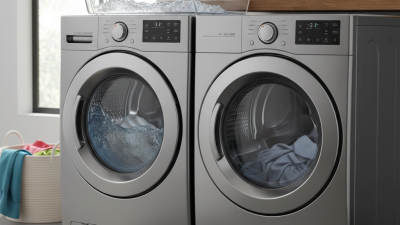
China Top 10 Stacking Washer and Dryer Suppliers?
How to Evaluate Chinese Washer and Dryer Suppliers
Supplier evaluation should begin with evidence, not a polished catalog. The International Energy Agency reports that buildings consume about 30% of global final energy. Therefore, request verified energy data for both washing and drying cycles. Check rated capacity, water use, noise, standby consumption, and drying efficiency under recognized test conditions. A factory should provide current certificates, laboratory reports, and traceable model numbers.
Production capability matters more than a low quotation. Ask whether the supplier controls motor assembly, drum balancing, software testing, and final inspection. Review monthly capacity, defect rates, spare-part availability, and quality records from the last 12 months. The International Organization for Standardization links effective quality systems with consistent process control, but certification alone proves little. Audit the production line if possible. Look for torque tools, electrical safety testing, leak testing, and packaging drop tests.
Stacking compatibility needs special attention. Confirm appliance dimensions, frame tolerances, vibration limits, and installation instructions. A 60-centimeter cabinet may still fail if door clearance is ignored. Request pilot samples before placing a large order. Independent inspection is useful, though not perfect. I would also compare warranty response times, remote troubleshooting, and replacement-part lead times. The temptation is to choose the cheapest supplier. That decision often becomes expensive later. Reports can contain outdated figures, so verify every claim against recent test results and factory evidence.
Recommended procurement weighting for comparing qualified suppliers without relying on brand names.
Product quality and compliance receive the highest weights because they directly affect safety, reliability, and market access. Production capacity, customization, and service should then be reviewed through factory audits, sample testing, certifications, order records, and after-sales procedures.
China’s Top 10 Stacking Washer and Dryer Suppliers should be assessed through evidence, not factory size alone. Statista Market Insights reports that China remains one of the world’s largest home-appliance markets by household demand. The China Household Electrical Appliances Association also highlights continuing upgrades toward energy efficiency, smart controls, and integrated laundry systems. These trends support strong supplier competition.
The leading ten suppliers usually combine automated production, export experience, and verified quality systems. Their stacking units should pass vibration, noise, door-lock, and thermal safety tests. Buyers should request test records, not attractive brochures. Capacity matters too. Suppliers producing several thousand units monthly may offer better continuity, but output claims require factory verification. That detail is often missed.
Efficiency deserves close attention. The International Energy Agency reports that appliances account for a significant share of residential electricity use worldwide. Therefore, heat-pump drying, lower standby consumption, and accurate moisture sensors can reduce operating costs. For commercial projects, check 220–240V compatibility, frequency options, drainage design, and replacement-part availability. A supplier with responsive technical support is more valuable than a low initial quotation.
Factory audits should review production records, worker training, incoming-material inspection, and corrective-action reports. Certification alone is not enough. Product samples can still reveal weak hinges or uneven stacking frames. This is where my assessment remains imperfect: public supplier rankings rarely disclose failure rates or long-term service data. Buyers should conduct pilot orders and monitor returns for at least one operating season.
| Rank | Supplier Profile | Main Manufacturing Region | Typical Product Positioning | Washer Capacity | Dryer Capacity | Common Voltage / Frequency | OEM / ODM Support | Typical MOQ | Estimated Lead Time | Common Compliance Documents |
|---|---|---|---|---|---|---|---|---|---|---|
| 1 | Profile A | Guangdong | High-volume household appliances | 8–12 kg | 8–10 kg | 220–240 V / 50 Hz | Available | 100–300 sets | 35–60 days | CE, EMC, RoHS, CB |
| 2 | Profile B | Zhejiang | Cost-effective export models | 7–10 kg | 7–9 kg | 220–240 V / 50 Hz | Available | 100–500 sets | 30–55 days | CE, RoHS, CB, test reports |
| 3 | Profile C | Jiangsu | Mid-range front-load systems | 8–11 kg | 8–10 kg | 220–240 V / 50 Hz | Available | 100–300 sets | 40–65 days | CE, EMC, RoHS, CB |
| 4 | Profile D | Anhui | Large-capacity family laundry | 10–13 kg | 9–11 kg | 220–240 V / 50 Hz | Available | 200–500 sets | 45–70 days | CE, RoHS, CB, energy test data |
| 5 | Profile E | Shandong | Commercial and light-duty laundry | 10–15 kg | 10–13 kg | 220–240 V / 50 Hz | Limited to standard models | 50–200 sets | 40–75 days | CE, EMC, RoHS, CB |
| 6 | Profile F | Fujian | Compact urban-apartment appliances | 6–9 kg | 6–8 kg | 220–240 V / 50 Hz | Available | 100–300 sets | 35–60 days | CE, RoHS, EMC |
| 7 | Profile G | Shanghai | Premium smart-control appliances | 9–12 kg | 8–10 kg | 220–240 V / 50 Hz | Available | 300–1,000 sets | 50–80 days | CE, EMC, RoHS, CB, software documentation |
| 8 | Profile H | Guangxi | Entry-level private-label products | 7–9 kg | 7–8 kg | 220–240 V / 50 Hz | Available | 100–500 sets | 30–55 days | CE, RoHS, EMC |
| 9 | Profile I | Hubei | Energy-conscious export configurations | 8–12 kg | 8–10 kg | 220–240 V / 50 Hz | Available | 200–500 sets | 45–70 days | CE, EMC, RoHS, CB, energy test data |
| 10 | Profile J | Chongqing | Regional OEM and replacement models | 7–11 kg | 7–10 kg | 220–240 V / 50 Hz | Available | 100–300 sets | 40–65 days | CE, RoHS, EMC, CB |
Note: The supplier names and brands are intentionally omitted. Capacity, MOQ, lead time, and compliance details are typical market-reference ranges and should be verified directly with each supplier before purchase.
Comparing China’s top ten stacking washer and dryer suppliers requires more than checking catalog photos. I examine drum capacity, energy use, noise levels, and stacking-kit compatibility. A stable frame matters when the dryer spins at high speed. Ask for test videos, installation drawings, and recent production samples. Small details often reveal manufacturing discipline.
Certifications should match the destination market, not merely appear in a sales file. Request current certificates, laboratory reports, and model numbers that match the quoted machines. Verify electrical safety, electromagnetic compatibility, and energy claims through recognized testing bodies. Some suppliers provide incomplete documents. That deserves careful follow-up. Factory audits can also confirm inspection steps, worker training, and packaging quality.
Prices usually vary because of motors, control panels, stainless-steel parts, order volume, and warranty coverage. Compare the full landed cost, including spare parts, shipping protection, installation guidance, and after-sales response times. A low quote may exclude testing or replacement components. Ask how quickly service teams handle a leaking hose or a damaged display. In my experience, clear answers matter more than polished brochures. Still, I would not treat one successful sample as proof of consistent quality. Recheck later batches. Evaluate communication, customization limits, payment terms, and realistic delivery schedules before choosing a supplier.
Choosing among China’s top ten stacking washer and dryer suppliers requires more than comparing prices. A suitable partner should understand your market, installation limits, and customer expectations. Ask for factory videos, production records, and recent test reports. Do not rely only on polished product photos.
Request a working sample before placing a large order. Check vibration, drying performance, door alignment, noise, and control-panel clarity. A narrow laundry room can expose design problems quickly. Confirm electrical specifications, safety documents, packaging strength, and spare-parts availability. The supplier should explain its quality-control process in practical terms, not vague promises. Verify lead times against real production capacity. A low quotation may hide expensive delays.
Communication matters after the deposit is paid. Test response speed with detailed technical questions. Clarify warranty coverage, replacement procedures, installation guidance, and responsibility for damaged shipments. I once underestimated packaging quality; one damaged corner created unnecessary delays and customer complaints. That experience changed my evaluation checklist. Still, no audit predicts every problem. Leave room for trial orders, inspection, and honest review. Choose the supplier that shares evidence, admits limitations, and improves when feedback is specific.