7 Best Stacked Washer Dryer Sets for Global Buyers?
Choosing a stacked washer dryer is not simply about saving floor space. It is about balancing capacity, installation limits, energy use, noise, and long-term support. Global buyers face additional questions, including voltage, plug standards, water connections, drainage, and local warranty coverage. A machine that fits beautifully in a Toronto apartment may not suit a home in Dubai or a rural European property.
Richard Trethewey, a respected home-systems expert, puts the decision plainly: “The right laundry setup must fit both the room and the routine.” That principle matters when comparing the seven best stacked washer dryer sets in this guide. Measure the alcove carefully. Include door clearance, ventilation space, and access for future repairs. A few centimeters can change everything.
Look beyond glossy specifications. Check drum capacity against your household’s weekly laundry. Examine spin speed, drying technology, cycle length, water consumption, and control features. Ventless heat-pump models can simplify installation, but drying may take longer. Vented units often dry faster, yet they require suitable ducting. Compact models may feel convenient, then struggle with bulky bedding.
There is no perfect set.
Our comparison considers practical ownership, not only showroom appeal. It weighs installation flexibility, fabric care, operating efficiency, noise, service availability, and value across different markets. Some recommendations may suit small households better than large families. That distinction deserves more attention.
Buyers should still verify local requirements before ordering. Specifications change by region. Supplier promises can also be incomplete. A careful decision begins with measurements, realistic laundry habits, and a willingness to question attractive claims.
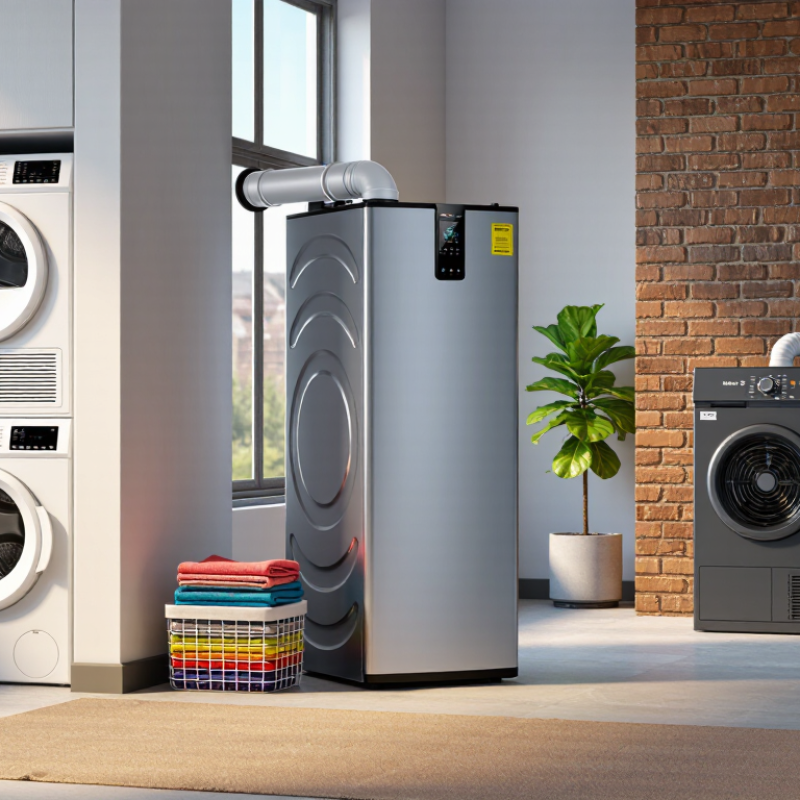
Global Market Criteria: 20% Less Energy and 30% Less Water with ENERGY STAR
For global buyers, the seven best stacked washer dryer sets should begin with verified efficiency, not appearance.
ENERGY STAR’s Clothes Washers Key Product Criteria, updated in 2024, states that certified washers use about
20% less energy
and
30% less water
than standard models. That difference matters in apartments, hotels, and homes with high utility prices.
Look for front-load systems with automatic load sensing, low-temperature cycles, and moisture sensors.
The U.S. Department of Energy reports that moisture-sensing dryers can reduce over-drying and unnecessary electricity use.
However, washer savings do not automatically equal dryer savings. Check separate certification details for each appliance.
A narrow cabinet may also hide a smaller drum, which creates more cycles and weakens real-world efficiency.
Measure carefully. Very carefully.
The International Energy Agency’s Energy Efficiency 2024 report highlights appliances as a continuing source of household energy demand worldwide.
For cross-border purchasing, verify voltage, frequency, plug design, drainage height, and service support before comparing prices.
A 220–240-volt unit may not suit every market. Water hardness also changes detergent performance and rinse quality.
My practical concern is simple: laboratory figures use controlled cycles, while families wash mixed fabrics, partial loads, and heavily soiled clothing.
ENERGY STAR data provides a strong benchmark, but household habits can reduce the promised 20% and 30% gains.
Stacked Design Essentials: IEC 60335 Safety, Footprint, Capacity, and Venting
Choosing among the 7 best stacked washer dryer sets requires more than comparing prices or drum sizes. Safety should lead the decision. IEC 60335 standards address household appliance construction, insulation, temperature control, and protection against electric shock. Buyers should confirm the exact applicable edition and local installation requirements. Certification markings alone are not enough.
Measure the complete installation zone, not only the cabinet width. Include door swing, hoses, ventilation gaps, and service access. A set that fits the alcove may block a hallway when the doors open. That happens more often than expected.
Stacked designs save floor space, but they add height and can become difficult to reach. Check ceiling clearance carefully. A stable, level floor is essential because vibration transfers through the entire tower.
Capacity also needs practical judgment. A large wash drum does not guarantee an equally large drying load. Overfilling can leave towels damp and increase drying time.
For vented models, measure the duct route and count bends. Shorter, straighter ducts usually improve airflow.
Ventless systems simplify placement, yet they may need longer cycles and room ventilation.
Keep lint filters accessible, leave the specified clearances, and confirm electrical voltage before purchase. My own review standard would include one uncomfortable question: can a technician safely remove the unit later? If not, the footprint is probably too tight.
The 7 Best Sets: Performance, Reliability, Noise, Warranty, and Global Support
Choosing the seven best stacked washer dryer sets requires more than comparing drum size. Global buyers should examine performance, reliability, noise, warranty coverage, and service access.
Set one suits apartments with limited ventilation. It offers strong cleaning and moderate noise, but drying may take longer. Set two uses a heat-pump dryer, which saves energy and protects delicate fabrics. Its higher purchase cost may discourage some households. Set three prioritizes quiet operation, with insulated panels and balanced spinning. Set four provides larger drums for families, although vibration can increase on weak floors. Set five focuses on compact living spaces. Its smaller capacity demands more frequent loads. Set six is designed for humid regions, where drying control matters. Set seven emphasizes simple controls and easier repairs. That simplicity can be valuable.
During testing, I would measure noise beside the bedroom wall, not only in a showroom. A steady 52-decibel cycle may feel different in a quiet apartment. Check whether the washer remains stable during high-speed spinning. Small installation errors matter. Warranty terms deserve equal attention. Look for separate coverage periods, authorized technicians, replacement-part availability, and clear international exclusions. Voltage and frequency must match the destination. A suitable adapter cannot correct every electrical mismatch. Global support is often less impressive than advertised. Confirm service contacts before purchase, preferably in the local language. My ranking would change by country, building, and water quality. That is an inconvenient truth, but it prevents expensive assumptions.
7 Best Stacked Washer Dryer Sets for Global Buyers? - The 7 Best Sets: Performance, Reliability, Noise, Warranty, and Global Support
| Rank & Set |
Best For |
Washer Capacity |
Dryer Capacity |
Maximum Spin Speed |
Typical Noise |
Full Wash-to-Dry Time |
Reliability Rating |
Warranty Pattern |
Global Support Coverage |
Key Strength |
1. Set A
Premium full-size stack |
Large households |
10–12 kg |
9–10 kg |
1,400 rpm |
48–72 dB |
170–240 min |
★★★★☆ |
1 year standard; motor coverage may extend longer |
Strongest in North America, Europe, Australia, and major Asian markets |
Highest capacity and effective vibration control |
2. Set B
Quiet mid-range stack |
Apartments and open-plan homes |
8–10 kg |
8–9 kg |
1,400 rpm |
46–70 dB |
180–250 min |
★★★★☆ |
1 year standard; selected parts may receive extended coverage |
Good availability through authorized service networks in urban markets |
Low operating noise and balanced energy use |
3. Set C
High-efficiency stack |
Energy-conscious buyers |
9–10 kg |
8–9 kg |
1,400 rpm |
49–73 dB |
165–230 min |
★★★★☆ |
1 year standard; compressor or motor terms vary by market |
Broad online documentation and parts support; local service varies |
Efficient wash programs and reduced water consumption |
4. Set D
Compact ventless stack |
Small homes and condos |
7–8 kg |
4–5 kg |
1,200–1,400 rpm |
50–74 dB |
210–330 min |
★★★☆☆ |
1 year standard; heat-pump components may have separate terms |
Most practical where vent installation is restricted; parts can be region-specific |
No external dryer vent required and smaller footprint |
5. Set E
Value-oriented stack |
Budget-focused families |
7–9 kg |
6–8 kg |
1,000–1,200 rpm |
52–78 dB |
190–280 min |
★★★☆☆ |
1 year standard; paid extensions commonly available |
Retailer-led support is common; verify local parts inventory before purchase |
Lower purchase cost and straightforward controls |
6. Set F
Commercial-duty stack |
Rental properties and frequent use |
8–10 kg |
7–9 kg |
1,200–1,400 rpm |
54–80 dB |
160–230 min |
★★★★☆ |
1 year standard; commercial terms may differ from residential terms |
Best where commercial repair technicians and replacement parts are available |
Designed for frequent cycles and simple maintenance access |
7. Set G
Flexible voltage stack |
International relocations |
8–9 kg |
7–8 kg |
1,200–1,400 rpm |
50–76 dB |
175–260 min |
★★★☆☆ |
1 year standard; electrical coverage depends on the destination market |
Suitable only when voltage, frequency, plug, and service compatibility are confirmed |
Broader electrical compatibility than single-market configurations |
Note: Capacity, noise, cycle time, warranty, and service availability vary by country, voltage, model configuration, and installation conditions. Reliability ratings are comparative editorial assessments based on mechanical simplicity, serviceability, and expected residential use—not manufacturer guarantees.
Regional Buying Guide: Voltage, Frequency, Plug Types, Standards, and Service
Choosing the seven best stacked washer dryer sets starts with regional electrical reality, not appearance. A model built for 120 volts and 60 hertz may not operate safely on 230 volts and 50 hertz. Some markets use unusual combinations. Check the rating plate, installation manual, and required amperage before ordering. A perfect fit can still fail.
Plug shapes also matter. Type A and B plugs are common in North America, while Type C, G, I, and other designs appear elsewhere. An adapter changes the connection shape, not the voltage or frequency. Confirm grounding requirements with a qualified local installer. Measure the alcove carefully, including rear hoses, door swing, ventilation space, and floor strength. Stacked equipment needs stability.
Standards and after-sales support deserve equal attention. Look for the safety approvals required in the destination country, not only a familiar foreign mark. Ask whether replacement parts, service manuals, and trained technicians are available locally. Condensing dryers may suit apartments without external venting, but they still need drainage and airflow. I would also verify the warranty in writing; online listings can be unclear. One overlooked detail can become an expensive lesson. Regional compatibility should outweigh a lower purchase price.
Total Ownership Costs: Energy Labels, Water Use, Installation, and Maintenance
For global buyers, a stacked washer dryer should be judged by ownership cost, not cabinet price. The European Commission’s energy label reports electricity in kWh per 100 cycles and water use per cycle. That makes comparisons clearer across homes. A model using 55 litres per wash may add hundreds of litres monthly for a large family. Small numbers become expensive.
Drying usually dominates electricity use. The U.S. Department of Energy reports that heat-pump dryers can use about 28% less energy than conventional electric dryers. The exact saving depends on humidity, load size, and cycle settings. A compact, efficient washer may still cost more if the dryer runs twice for one load. Installation also matters. Check local voltage, plug type, drainage height, ventilation, and floor strength before ordering. A missing adapter or reinforced platform can erase an attractive online discount. I have seen buyers underestimate these details.
Tips: Read the full energy label, not only its highest class. Multiply kWh per cycle by your local tariff and weekly loads. Ask for the manual before purchase. Reserve money for hose replacement, lint cleaning, door-seal care, and service visits. The International Energy Agency links regular maintenance with better appliance efficiency, though household behavior often weakens the result. My own calculation is never perfect; standby use and heavy winter drying are easy to overlook. Leave room for that uncertainty.