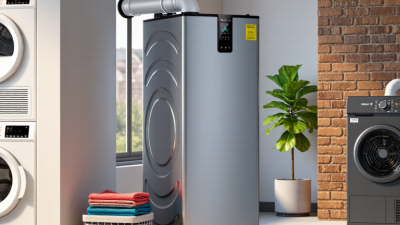
7 Tips for Stacking Washer and Dryer Safely?
Stacking washer and dryer can save valuable floor space, especially in a narrow utility closet or small apartment. However, a tidy vertical setup is not automatically a safe one. The washer’s vibration, the dryer’s heat, and the combined weight create practical risks that deserve careful attention.
Appliance expert Doug Rogers has advised, “Never stack a dryer on a washer unless the manufacturer specifically approves the combination.” That principle guides this article. The seven tips below focus on compatible models, the correct stacking kit, a level floor, secure connections, proper ventilation, stable power, and careful testing. Each detail matters. A missing bracket or uneven foot can turn a normal spin cycle into a loud, shifting problem.
Experience also teaches an uncomfortable lesson: many installations look secure before the first load. Then the washer begins shaking across the floor. That possibility should not be ignored. Measure the space twice. Check the manuals, not just the product photos. Keep the dryer firmly supported, and never improvise with shelves, loose boards, or unrelated hardware. Small shortcuts may appear harmless. They can become expensive mistakes.
This guide is written for homeowners, renters with permission, and anyone planning a professional installation. It does not replace the manufacturer’s instructions or qualified service advice. If the wall, floor, vent, or electrical connection seems questionable, pause. Safety is more important than finishing quickly.
Check Washer and Dryer Compatibility Before Stacking
Check washer and dryer compatibility before stacking. Both machines must be designed to work together. Measure their width, depth, and height, then compare those figures with the approved stacking specifications. Similar dimensions are not enough. A top-loading washer usually needs open space above it. A front-loading pair is often more suitable, but always confirm the required model combination.
Check the washer’s maximum spin speed, the dryer’s weight, and the correct stacking kit. Use a kit made for that exact appliance pairing. Do not improvise with shelves, wood, or loose brackets. Confirm that the floor is level, strong, and dry. Leave room for ventilation, hoses, doors, and service access. Inspect power outlets and water connections carefully. Avoid extension cords. A qualified installer can spot hidden risks, especially in older laundry rooms.
Secure the washer first. Adjust every foot until the machine sits firmly. The dryer should be lifted by trained adults or suitable equipment. Never stack appliances alone. Run a short test cycle and watch for walking, rattling, or unusual movement. I once trusted matching measurements and missed a rear vent obstruction. The machines fit, but airflow suffered. That mistake changed my checklist. Recheck the setup after several loads, because vibration may expose a problem that seemed harmless on installation day.
Install an Approved Stacking Kit Correctly
7 Tips for Stacking Washer and Dryer Safely
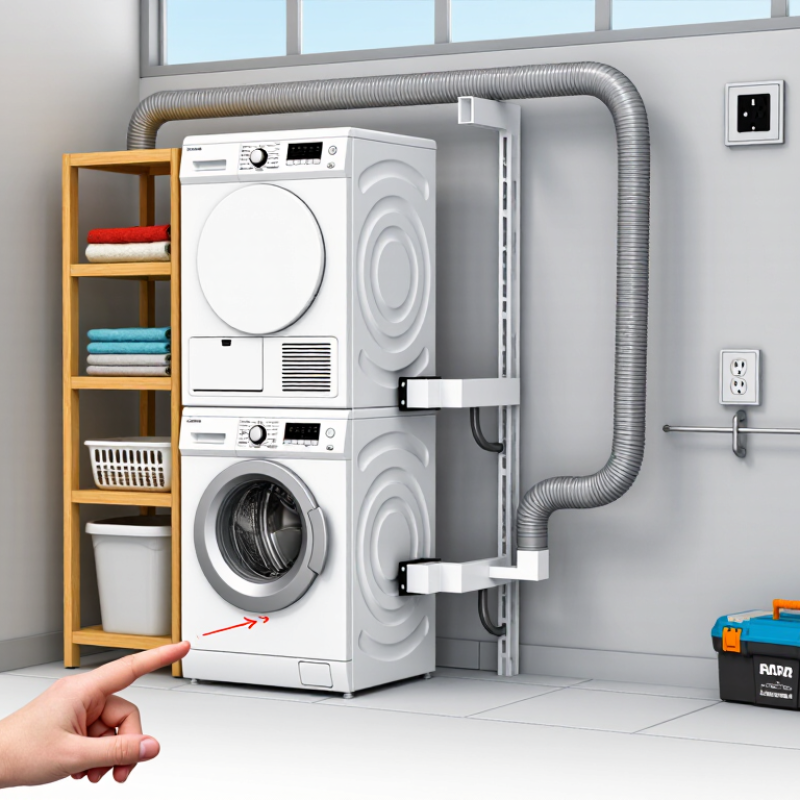
Install an approved stacking kit made for your exact washer and dryer models. Do not rely on a generic bracket or improvised hardware. The kit should lock the dryer to the washer’s frame, not merely sit beneath it. Follow the installation manual, including screw locations and tightening instructions. A small mistake can create movement during high-speed spinning.
Tip 1: Check the floor first. It must be hard, level, and strong enough for both appliances. Tip 2: Place the washer below the dryer. Tip 3: Use a spirit level on the washer before stacking. Even careful installers can miss a slight tilt. Tip 4: Confirm that the kit’s clips, rails, and screws are fully engaged. The dryer should not shift when gently pushed.
The National Fire Protection Association reported an average of 15,970 home structure fires caused by clothes dryers each year from 2010 to 2014. These fires caused 13 deaths, 440 injuries, and about 238 million dollars in property damage. A blocked or crushed exhaust hose increases risk. Keep the hose short, smooth, and properly connected. Tip 5: Leave ventilation space around the dryer. Tip 6: Test the door and controls after installation. Tip 7: Run a short cycle and watch for vibration. If the stack rocks, stop. Recheck the kit and leveling. Some installations look finished but still need correction.
Secure Both Appliances and Verify Their Alignment
7 Tips for Stacking Washer and Dryer Safely?
Secure both appliances before checking their alignment. Start by reading the installation instructions for both units. Confirm that the washer and dryer are designed for stacking together. Inspect the floor, too. It must be firm, dry, and level, without loose tiles or thick carpeting. I once found a slight floor slope that looked harmless but caused noticeable movement during spinning.
Use the correct stacking kit, not improvised brackets or household tape. Position the washer first, then adjust its feet until it sits firmly without rocking. Lock each foot according to the instructions. Place the dryer carefully on top, keeping its weight centered. Fasten the upper appliance to the lower one with every supplied connector. Check the rear and side clearances so hoses, cords, and ventilation paths are not crushed.
Alignment needs more than a quick glance. Place a spirit level across the front, then check it from side to side and front to back. The cabinet may look straight and still lean slightly. Run a short empty cycle and watch for shaking, walking, or unusual noise. Stop immediately if movement appears. Recheck every connection and foot adjustment. A second inspection is worthwhile, although it can feel excessive. After installation, inspect the stack again after several loads, because vibration may reveal problems that were invisible at first.
7 Tips for Stacking a Washer and Dryer Safely
Use this seven-step sequence to secure both appliances and verify that they remain properly aligned before regular use.
Safety Checklist
1. Confirm compatibility: Check that the washer and dryer are designed for stacking and use the correct stacking kit.
2. Place the dryer on top: The dryer should be positioned above the washer, never the other way around.
3. Prepare a solid base: Install the washer on a firm, level floor that can support both appliances.
4. Level the washer: Adjust the leveling feet and tighten the locking nuts to reduce vibration.
5. Secure both appliances: Install every bracket, rail, or fastener supplied with the stacking kit.
6. Verify alignment: Check that the front and side edges are aligned and that hoses and cables are not pinched.
7. Test before regular use: Run a short empty cycle and stop immediately if the stack shifts, rocks, or produces unusual noise.
Test the Stacked Units for Safe and Stable Operation
After stacking a washer and dryer, test both appliances before using them normally.
A stable setup should feel solid, not merely look tidy. Check that the floor is level and strong enough for the combined weight. Confirm that the stacking frame is fully secured and all fasteners are tight. The dryer must sit evenly above the washer, without leaning forward or sideways.
Run the washer on a short rinse cycle with a few towels inside. Watch the corners, floor, and frame during filling, draining, and spinning. Notice any rocking, sharp movement, or unusual knocking. Stop the cycle if the stacked units shift. I have found that slow movement can be easy to miss, especially on hard flooring. Put one hand lightly against the side. Do not push the appliance.
Test the dryer separately on a low-heat cycle.
Listen for rattling, scraping, or a deep vibration through the wall. Check that the exhaust connection remains secure and warm air leaves properly. After both tests, inspect the feet and frame again. A small gap can appear after the first spin. That detail matters. If movement continues, unplug the appliances and request an inspection from a qualified technician. Do not add improvised blocks, straps, or heavy objects to correct the problem. Safety checks are sometimes repetitive, but rushing this stage can hide a serious instability.